
What's Happening?
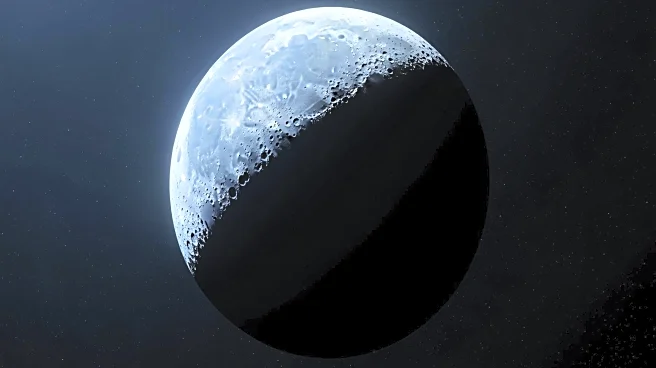
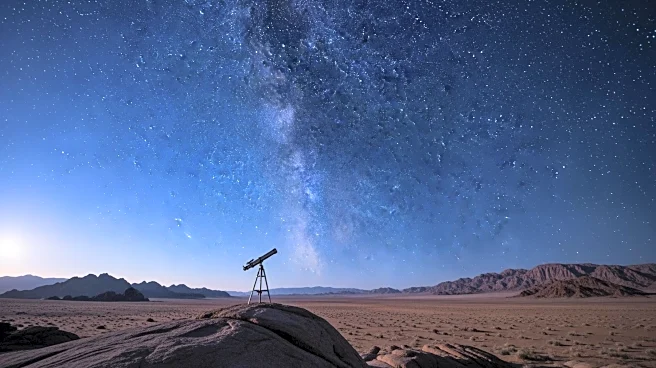
On January 18, 2026, a new moon will create optimal conditions for observing Jupiter, Saturn, and the Orion constellation. The absence of moonlight will enhance visibility, making it an ideal night for both
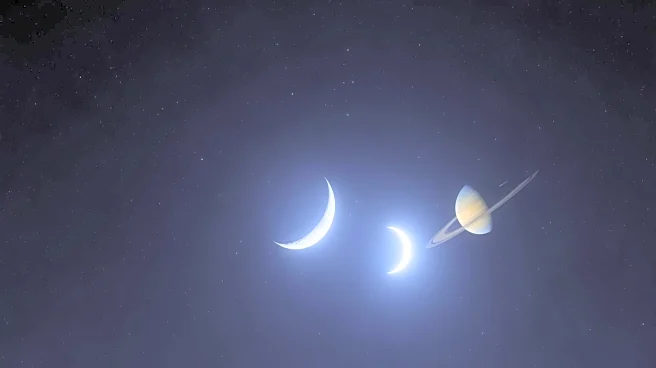
amateur and experienced astronomers to explore deep-sky objects and star clusters. Jupiter will be visible almost all night, reaching its highest point around 11:23 p.m. EST, while Saturn will shine low in the southwestern sky just after sunset. The Orion constellation, including its prominent belt and the Orion Nebula, will also be easily observable. This celestial event provides a rare opportunity for skywatchers to enjoy the beauty of the cosmos without the interference of moonlight.
Why It's Important?
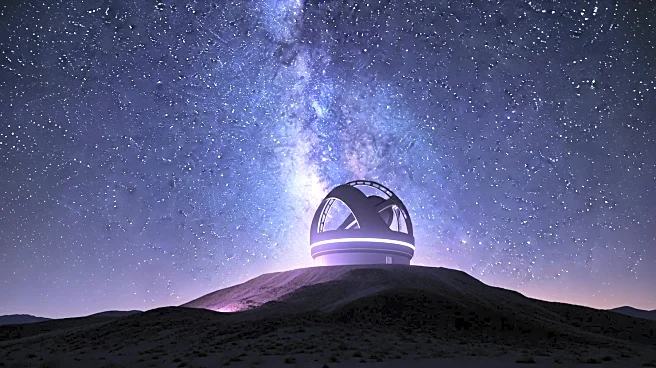
The new moon on January 18, 2026, presents a unique opportunity for astronomers and sky enthusiasts to observe celestial bodies with enhanced clarity. The absence of moonlight allows for better visibility of planets and constellations, offering educational and recreational benefits. This event encourages public interest in astronomy and provides a shared experience for people across different regions. It also highlights the importance of dark sky preservation, as light pollution can significantly impact the ability to observe such celestial events.
What's Next?
Following this event, astronomers and enthusiasts may continue to monitor the night sky for other celestial occurrences. The return of the moon will eventually wash out some of the visibility, but the interest generated by this event could lead to increased participation in future skywatching activities. Educational institutions and astronomy clubs might organize events to capitalize on the public's interest, fostering a greater appreciation for astronomy and science.