

What's Happening?
NASA is closely monitoring solar activity to ensure the safety of astronauts on the upcoming Artemis II mission, which will take them beyond Earth's magnetic field. The mission involves a 10-day flight around the Moon, during which the crew will be exposed
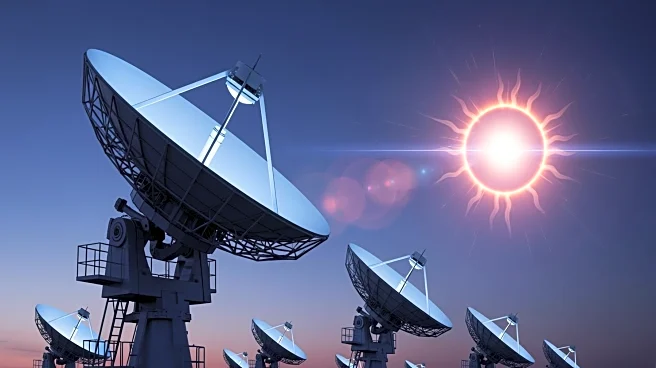
to space weather conditions, including solar flares and coronal mass ejections. NASA, in collaboration with NOAA, will provide real-time space weather analysis to protect the astronauts from increased radiation levels. The mission marks the first time in 50 years that astronauts will venture into deep space, requiring advanced monitoring and protective measures.
Why It's Important?
The Artemis II mission is a critical step in NASA's efforts to establish a long-term human presence on the Moon and eventually Mars. Monitoring solar activity is essential to ensure the safety of astronauts, as exposure to high levels of radiation can have serious health implications. The mission will test NASA's ability to manage space weather risks, which is crucial for future deep space exploration. Successful management of these risks will pave the way for more ambitious missions and contribute to the development of sustainable space travel.
What's Next?
As the Artemis II mission approaches, NASA will continue to refine its space weather monitoring and response strategies. The mission will provide valuable data on radiation exposure and the effectiveness of protective measures, informing future missions. NASA's ongoing collaboration with NOAA and other agencies will enhance the understanding of space weather and its impact on human spaceflight. The insights gained from Artemis II will support the planning and execution of subsequent Artemis missions and other deep space endeavors.