




What's Happening?
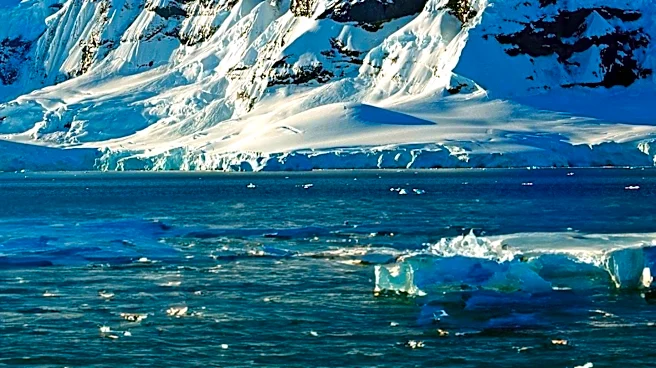
Researchers from the University of Oulu and Aarhus University are conducting a field campaign in Greenland's Zackenberg Valley to study its carbon balance. Traditionally, the Arctic has functioned as a carbon sink, absorbing more carbon than it releases.
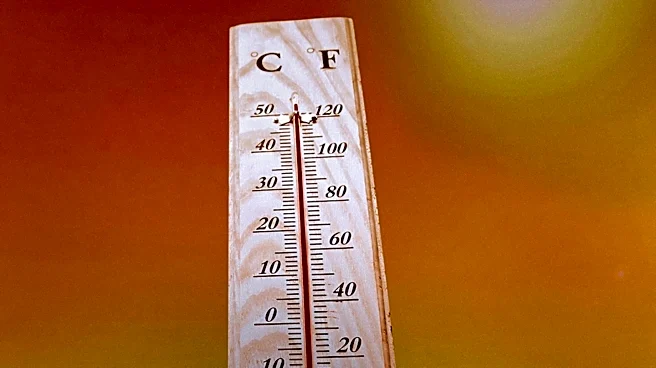
However, rising global temperatures threaten to alter this balance, potentially transforming the Zackenberg Valley into a significant source of carbon emissions. The OU-BACE30 project aims to understand how much carbon the area absorbs and stores, and how much is released into the atmosphere or transported by water. The research focuses on High Arctic tundra landscapes underlain by permafrost, particularly peatlands, which are crucial natural carbon stores. As permafrost thaws and soils warm, stored carbon can be released as greenhouse gases like carbon dioxide and methane, contributing to climate change. The study also draws comparisons with Finnish peatlands, which are experiencing warmer conditions, to predict future changes in Arctic ecosystems.
Why It's Important?
The potential shift of the Arctic from a carbon sink to a carbon source has profound implications for global climate change and U.S. environmental policy. The Arctic plays a critical role in regulating global temperatures, and if it begins to release more carbon than it absorbs, it could accelerate the rate of warming worldwide. This would exacerbate extreme weather events, sea-level rise, and other climate-related challenges, directly impacting U.S. coastal communities, agriculture, and infrastructure. The findings from this research could inform international climate agreements and domestic environmental regulations, potentially leading to more stringent emissions targets and increased investment in climate adaptation strategies. Furthermore, the study highlights the interconnectedness of global ecosystems, demonstrating how changes in remote regions like the Arctic can have far-reaching consequences for the U.S. economy and society. Understanding these dynamics is crucial for developing effective long-term climate mitigation and adaptation plans.
What's Next?
The researchers plan to continue monitoring the Zackenberg Valley in the coming years to observe how the carbon cycle varies under different environmental conditions. This long-term data collection is essential for interpreting satellite data and improving computational models that predict climate change impacts. Further analysis of water samples, sensor data, and atmospheric measurements will help determine the precise mechanisms of carbon movement within the Zackenberg ecosystem and the roles of plant species and environmental conditions. The insights gained from this ongoing research will be critical for refining climate models and informing policy decisions related to Arctic conservation and global carbon emissions. The findings could also influence international discussions on sustainable development in the Arctic, particularly concerning activities like the Arctic Maritime Route, which also presents environmental tensions.
Beyond the Headlines
The research in the Zackenberg Valley underscores a deeper ethical and scientific challenge: the tipping points within natural systems. The Arctic's potential transition from a carbon sink to a source represents a critical threshold, beyond which the feedback loops of climate change could intensify dramatically. This raises questions about humanity's responsibility to protect these fragile ecosystems and the long-term consequences of inaction. The study also highlights the complexity of carbon cycling, where factors like plant root characteristics, peat depth, and water transport play intricate roles in greenhouse gas emissions. This intricate web of interactions necessitates a holistic approach to environmental management, moving beyond simple emission reduction targets to encompass ecosystem preservation and restoration. The findings could also influence the development of new technologies for carbon capture and storage, as the natural capacity of the Arctic to absorb carbon diminishes.