



What's Happening?
The United Nations Office for the Coordination of Humanitarian Affairs (OCHA) has issued a stark warning regarding the escalating hunger crisis in Afghanistan. According to OCHA, nearly one-third of the country's population is currently facing severe
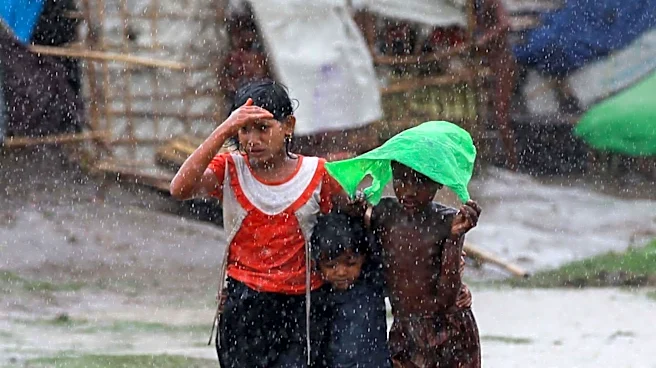
hunger. This critical situation persists despite improved rainfall and increased agricultural production, as millions of families remain unable to afford essential food supplies. OCHA projects that over four million children between the ages of six months and five years will require treatment for malnutrition in 2027. The agency is urging immediate action to address these urgent needs before the onset of winter, which typically exacerbates humanitarian challenges in the region.
Why It's Important?
The severe hunger crisis in Afghanistan carries profound implications for the country's stability and the well-being of its population, particularly children. Malnutrition in early childhood can lead to irreversible physical and cognitive impairments, impacting long-term health, educational attainment, and future economic productivity. The inability of families to afford food, even with improved agricultural output, points to deeper systemic issues such as economic instability, lack of livelihoods, and potentially disrupted supply chains or market access. This situation could trigger further displacement, social unrest, and increased reliance on humanitarian aid, straining international resources. The impending winter threatens to worsen the crisis, as cold weather makes access to food and healthcare more challenging, increasing mortality risks among vulnerable groups.
What's Next?
OCHA has called for urgent action to address the immediate needs of the Afghan population before winter. This includes providing emergency food assistance, nutritional support for children, and strengthening healthcare services. Beyond immediate relief, OCHA emphasizes the importance of long-term investment in livelihoods, essential services, and economic opportunities. Such investments are crucial for building the resilience of Afghan families to cope with future crises and reduce their dependency on humanitarian aid. International donors and humanitarian organizations will likely need to increase their funding and operational capacity to meet the projected needs, especially for the four million children expected to require malnutrition treatment. The effectiveness of these efforts will depend on secure access for aid workers and sustained political will from all stakeholders.
Beyond the Headlines
The persistent hunger in Afghanistan, despite improved agricultural conditions, highlights a critical disconnect between food availability and food accessibility. This suggests that the crisis is not solely a matter of production but also one of economic access, distribution, and purchasing power. The long-term instability and conflict in Afghanistan have eroded economic structures, leaving many without stable incomes or savings to buffer against price fluctuations or economic shocks. This situation can lead to a 'poverty trap' where families are forced to make impossible choices, such as selling assets or pulling children out of school, further entrenching their vulnerability. Addressing this requires not just humanitarian aid but also comprehensive development strategies that foster economic recovery, create sustainable livelihoods, and strengthen social safety nets to build a more resilient society.