
What's Happening?
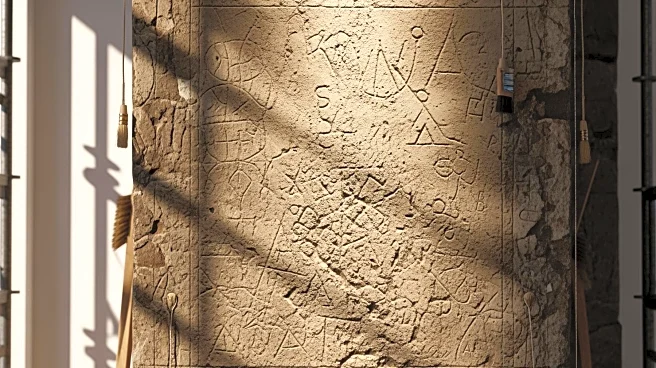
Conservators at Blenheim Palace in the UK have uncovered a series of mysterious graffiti inscriptions dating back to the 19th century during restoration work. These inscriptions, found on the ceilings
of the Great Hall and Saloon, include names and phrases left by past workers. The discovery challenges previous assumptions that the current restoration is the first access to these ceilings in centuries. The restoration project, led by OPUS Conservation and funded by the National Lottery Heritage Fund and the Blenheim Foundation, aims to address material and structural instabilities in the palace. The project, costing £12 million, includes a £1 million allocation for the restoration of paintings by Baroque artists James Thornhill and Louis Laguerre. The palace is seeking public assistance to identify the individuals behind the graffiti, which includes names like 'J F Brennan 1968' and 'T Harwood Plasterer 1843'.
Why It's Important?
The discovery of the graffiti at Blenheim Palace provides a unique historical insight into the lives of the workers who contributed to the palace's maintenance over the centuries. This revelation not only enriches the historical narrative of the UNESCO World Heritage Site but also highlights the importance of preserving and understanding cultural heritage. The restoration project itself is significant as it represents the most ambitious conservation effort in the palace's history, ensuring the preservation of its architectural and artistic treasures for future generations. The public's involvement in identifying the graffiti authors fosters a sense of community engagement and connection to history, potentially leading to a deeper appreciation of cultural heritage preservation.
What's Next?
As the restoration project continues, efforts to identify the individuals behind the graffiti will likely intensify, with the palace encouraging public participation. The restoration of the paintings by Thornhill and Laguerre is expected to be completed by 2026, ensuring the preservation of these significant artworks. The ongoing project may also inspire similar conservation efforts at other historical sites, emphasizing the importance of maintaining cultural heritage. Additionally, the findings could lead to further research into the history of Blenheim Palace and its workers, potentially uncovering more about the social and cultural context of the time.