




What's Happening?
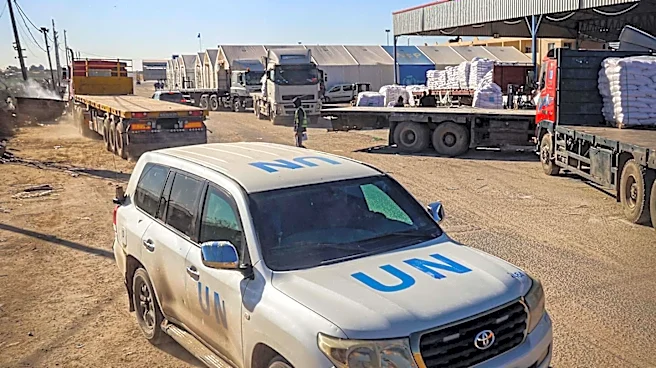
Tom Fletcher, the United Nations' global head of humanitarian issues, has commended Canada for its significant contributions to aiding vulnerable populations worldwide. During a visit to Ottawa, Fletcher, who leads the Office for the Coordination of Humanitarian
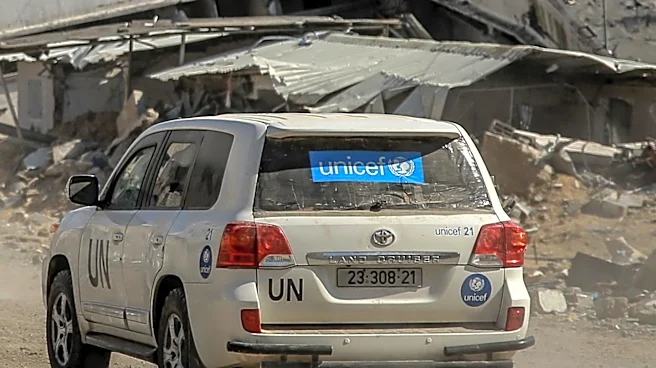
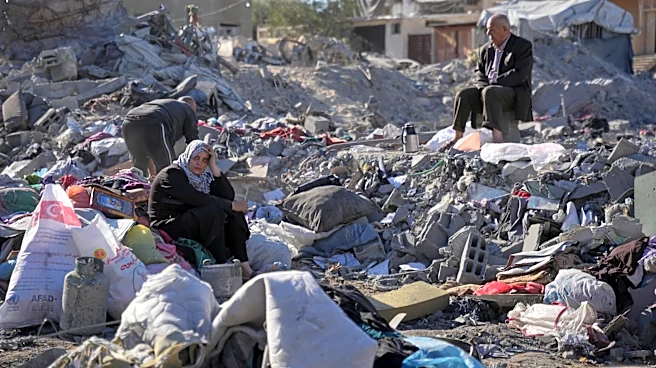
Affairs, lauded Canada as a 'humanitarian superpower' and expressed hope for its continued commitment. He highlighted Canada's advocacy and foreign aid funding as instrumental in saving millions of lives across various crises, including those in Sudan, Afghanistan, Gaza, Ukraine, and Haiti. Fletcher's term began shortly before the U.S. implemented substantial cuts to foreign aid, though he noted the U.S. has since restored some of that funding. He emphasized that funding shortfalls are exacerbated by ongoing conflicts that spread hunger and impede humanitarian relief efforts. Fletcher also voiced concerns about the normalization of practices observed in Gaza, such as restricting journalists and aid flows, warning that such actions undermine international law and foster a climate of impunity.
Why It's Important?
Fletcher's remarks underscore the critical role of international cooperation and funding in addressing complex humanitarian crises. His praise for Canada highlights the country's growing influence and responsibility in global humanitarian efforts, particularly as traditional aid structures face challenges. The concern over practices in Gaza, specifically the restriction of journalists and aid, is significant because it points to a broader erosion of international humanitarian law and principles. Such normalization could have far-reaching implications, making it more difficult for aid organizations to operate effectively and for the international community to hold actors accountable in conflict zones. The call for accountability from member states is crucial for maintaining the integrity of international law and ensuring the protection of civilians and aid workers in increasingly complex and dangerous environments. The U.S.'s fluctuating foreign aid commitments also play a role in the global humanitarian landscape, impacting the capacity of organizations to respond to urgent needs.
What's Next?
Canada is set to chair a donor support group in July, which will consult with other wealthy nations on the allocation of UN humanitarian funding. Fletcher views this as an opportunity for a 'reimagination' of humanitarian aid, suggesting a need to look beyond traditional partners to include technology companies and the private sector in addressing global crises. He also noted that UN agencies and large organizations are vital for tackling complex issues like the hunger crisis in Darfur. However, he proposed that in areas with internet connectivity and functioning markets, cash transfers to individuals or healthcare programs involving private companies might be more effective. Fletcher's comments also indicate a continued push for consistency in upholding international law, despite pressure to alter reporting or advocacy. The ongoing use of drones against civilians in conflicts like those in Sudan, Ukraine, Gaza, and Lebanon further emphasizes the urgent need for member states to hold themselves and each other accountable for adherence to international humanitarian law.
Beyond the Headlines
The discussion about 'reimagining' humanitarian aid by engaging technology companies and the private sector signals a potential paradigm shift in how global crises are addressed. This approach could introduce innovative solutions and additional resources but also raises questions about the ethical implications of private sector involvement in humanitarian efforts, including potential conflicts of interest or the prioritization of profit over need. Fletcher's observation that technology is making wars easier to fight, particularly with the increased use of drones against civilians, highlights a critical ethical and legal challenge for the international community. It necessitates a re-evaluation of existing international laws of armed conflict and the development of new frameworks to regulate emerging military technologies. The sustained criticism faced by Fletcher from supporters of Israel, who accuse the UN of downplaying certain issues, underscores the politicization of humanitarian aid and the difficulties in maintaining neutrality and impartiality in highly charged conflicts.