
What's Happening?
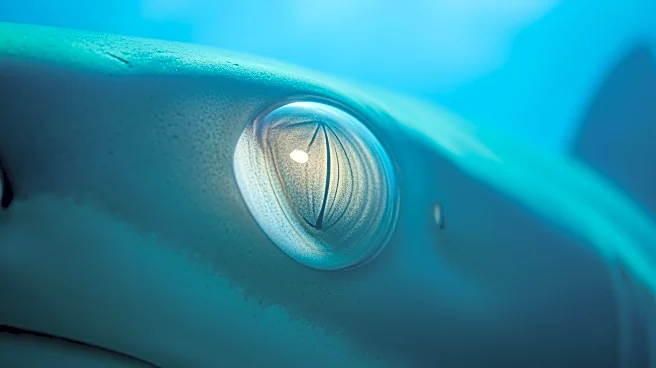
A recent study has uncovered that Greenland sharks, known for their exceptional longevity, possess a functional visual system despite living in the deep, dark ocean. Previously, scientists believed these
sharks had poor vision due to their habitat and the presence of parasites on their corneas. However, research conducted by a team from the US, Switzerland, and Denmark has shown that these sharks maintain a healthy retina and can see in low-light conditions. The study involved examining the molecular, genomic, and tissue structures of the sharks' eyes, revealing that their retinas are adapted for night vision, with no signs of degeneration even in sharks over 100 years old. This discovery suggests that the sharks' DNA repair mechanisms may play a role in preserving their vision, although its implications for human eye health remain unclear.
Why It's Important?
The findings about Greenland sharks' vision and longevity could have significant implications for understanding aging and eye health in other species, including humans. The sharks' ability to maintain retinal health over a century suggests potential avenues for research into DNA repair and neuronal maintenance. This could lead to advancements in treating or preventing age-related vision loss in humans. Additionally, the study highlights the adaptability of marine life to extreme environments, offering insights into evolutionary biology and the resilience of life forms in harsh conditions. Understanding these mechanisms could inform conservation efforts and strategies to protect marine biodiversity in the face of environmental changes.
What's Next?
Future research may focus on exploring the specific DNA repair mechanisms that contribute to the Greenland sharks' retinal health and longevity. Scientists could investigate whether these mechanisms can be applied to other species or used to develop treatments for human eye conditions. Additionally, the study may prompt further exploration of other long-lived marine species to uncover similar biological adaptations. Conservationists might also use this information to advocate for the protection of deep-sea habitats, ensuring the survival of these unique species and the ecosystems they inhabit.
Beyond the Headlines
The study of Greenland sharks' vision and longevity opens up broader discussions about the ethical considerations of using marine life for scientific research. It raises questions about the balance between gaining scientific knowledge and the impact on the species being studied. Furthermore, the research underscores the importance of preserving marine environments, as these ecosystems hold valuable biological insights that could benefit humanity. The findings also contribute to the ongoing dialogue about the effects of climate change on oceanic life and the need for sustainable practices to mitigate these impacts.