



What's Happening?
India is making significant strides towards achieving its net-zero emissions target by 2070, with electric mobility playing a central role. Union Heavy Industries Minister H.D. Kumaraswamy highlighted this commitment during the inauguration of Ashok Leyland's
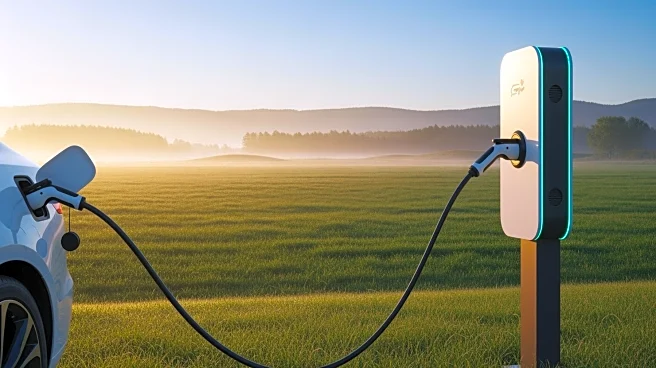
new electric vehicle manufacturing plant in Lucknow. The Indian government is implementing strategic plans to reduce fossil fuel dependency and carbon emissions, supported by initiatives like FAME-II and PM e-Drive. These efforts include establishing over 70,000 EV charging stations nationwide, aiming to boost electric vehicle adoption and foster innovation in local manufacturing.
Why It's Important?
India's focus on electric mobility is crucial for its climate action strategy, as the transport sector is a significant contributor to carbon emissions. By investing in electric vehicles and infrastructure, India aims to reduce its environmental impact and enhance energy security. This transition supports the country's broader goals of sustainable development and economic self-reliance. The success of these initiatives could position India as a leader in clean energy and set a precedent for other developing nations seeking to balance economic growth with environmental responsibility.
What's Next?
The Indian government plans to continue expanding its electric vehicle infrastructure and support policies to encourage widespread adoption. This includes potential collaborations with international partners and private sector investments to accelerate the transition. The success of these efforts will depend on overcoming challenges such as technological advancements, cost reductions, and consumer acceptance. As India progresses towards its net-zero target, it will likely influence global discussions on sustainable transport and climate policy.