



What's Happening?
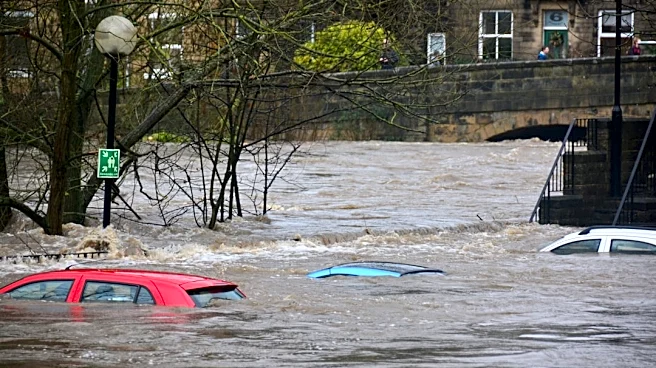
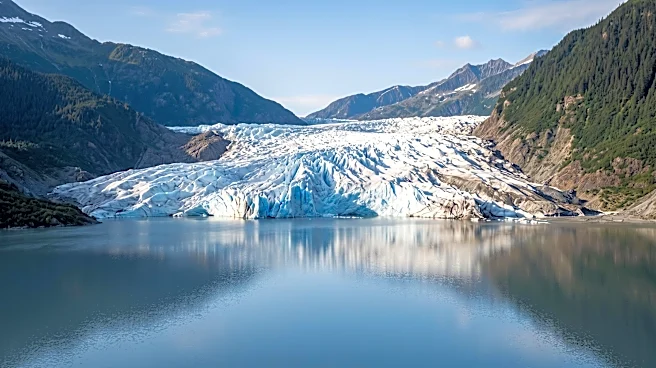
The city of Juneau, Alaska, has developed and implemented a sophisticated, publicly available dashboard to help residents understand and prepare for increasingly severe glacial outburst floods from the Mendenhall Glacier. These floods have occurred annually
since 2011, with a significant increase in severity since 2023, causing widespread inundation and property damage. In response to the inadequacy of existing flood prediction maps, city officials collaborated with scientists from the University of Alaska Southeast to create accurate local flood maps through door-to-door surveys. The dashboard, launched in 2024, provides background on glacial outburst flooding, real-time monitoring of water levels, and a map allowing residents to assess their specific risk by address. This initiative has fostered significant trust and empowerment within the community.
Why It's Important?
This initiative by Juneau is a critical case study in community resilience and climate adaptation, particularly as extreme weather events intensify globally. By providing direct, scientifically-backed information to its residents, Juneau is empowering individuals to make informed decisions about their safety and property, such as when to evacuate or invest in home elevation. This approach builds trust between the public, city officials, and scientists, counteracting misinformation and politicization often associated with climate-related issues. The success of Juneau's accurate forecasting and community engagement demonstrates a proactive model for other communities facing similar environmental threats, highlighting the importance of localized data and transparent communication in disaster preparedness.
What's Next?
Juneau will continue to refine and update its glacial outburst flood dashboard, incorporating new scientific data and community feedback to enhance its accuracy and usability. The city's ongoing collaboration with the Army Corps of Engineers to build and maintain river barriers will also be crucial in mitigating flood impacts. Scientists involved in the project are expected to maintain their active role in public engagement, continuing to hold lectures and Q&A sessions to keep residents informed and address concerns. The long-term goal is to foster a continuously informed and prepared populace capable of adapting to the recurring nature of these floods, potentially inspiring other vulnerable communities to adopt similar data-driven, community-centric preparedness strategies.
Beyond the Headlines
The Juneau model transcends typical disaster preparedness by deeply integrating scientific understanding with public engagement, transforming scientists into 'rock stars' within the community. This level of trust and direct access to complex data empowers citizens, shifting them from passive recipients of warnings to active participants in their own safety and resilience planning. It also highlights the ethical dimension of climate adaptation: while protective barriers may alter riverfront views, informed consent and understanding of the necessity foster community buy-in. This approach offers a powerful antidote to climate skepticism, demonstrating that direct, transparent scientific communication can build collective action and resilience in the face of ongoing environmental challenges, setting a precedent for how communities can navigate the realities of a changing climate.