
What's Happening?
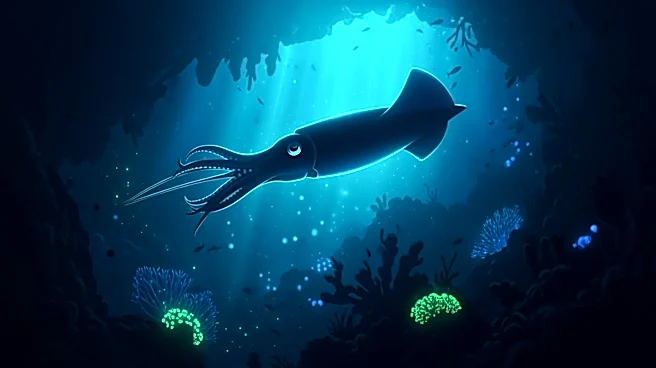
A study led by Curtin University has uncovered a diverse array of marine life, including giant squid, off Western Australia's Nyinggulu coast. The research, conducted in the Cape Range and Cloates submarine
canyons, utilized environmental DNA (eDNA) to identify species from genetic traces in seawater. The findings include evidence of giant squid and several species potentially new to science. The study identified 226 species across various animal groups, highlighting the rich biodiversity of these deep-sea environments.
Why It's Important?
The discovery of giant squid and other deep-sea species underscores the vast, largely unexplored biodiversity of oceanic environments. The use of eDNA represents a significant advancement in marine research, allowing scientists to detect elusive species without direct observation. This method could revolutionize how marine ecosystems are studied and managed, providing critical data for conservation efforts. Understanding deep-sea biodiversity is essential for informed marine park planning and environmental protection, particularly as these ecosystems face threats from climate change and human activities.
What's Next?
The research team plans to continue exploring deep-sea environments using eDNA and other advanced techniques. The findings will contribute to a growing body of knowledge about marine biodiversity, informing conservation strategies and policy decisions. Further studies may focus on the ecological roles of newly discovered species and their interactions within the ecosystem. The project highlights the importance of international collaboration in advancing marine science and protecting oceanic habitats.