
What's Happening?
Researchers have identified vertebrae from a massive prehistoric shark that once dominated the waters off northern Australia. This discovery dates the shark back to the Cretaceous period, making it the earliest
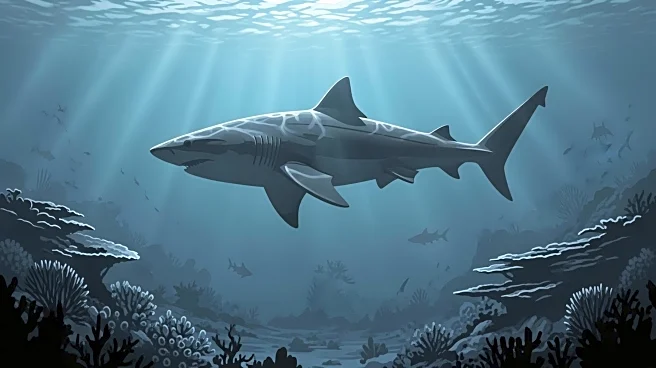
known mega-predator of the modern shark lineage. The vertebrae, found near Darwin, Australia, were initially unearthed in the late 1980s and 1990s but had been overlooked until now. The shark, an ancestor of today's great white, was estimated to be about 8 meters long, significantly larger than previously known sharks from that era. This finding pushes back the timeline for when these mega-predatory sharks existed, suggesting they lived 15 million years earlier than previously thought.
Why It's Important?
This discovery is significant as it reshapes the understanding of shark evolution and the history of marine predators. The identification of such an ancient and large predator highlights the evolutionary success of the shark body model, which has persisted for millions of years. This research provides insights into the adaptive evolution of sharks, suggesting that they rose to the top of the food chain much earlier than previously believed. Understanding these ancient ecosystems can offer valuable lessons on how current species might adapt to environmental changes, contributing to broader ecological and evolutionary studies.
What's Next?
The research team plans to continue exploring similar environments worldwide to uncover more evidence of these ancient sharks. By studying past shifts in climate and biodiversity, scientists aim to gain a better understanding of potential future changes in marine ecosystems. This ongoing research could lead to further discoveries about the evolutionary history of marine life and the factors that have shaped the current biodiversity of the oceans.
Beyond the Headlines
The study of these ancient sharks not only provides a glimpse into the past but also raises questions about the resilience and adaptability of marine species. The evolutionary success of the shark body model over millions of years underscores the importance of understanding evolutionary processes. This research could influence conservation strategies by highlighting the long-term impacts of environmental changes on marine life.