


What's Happening?
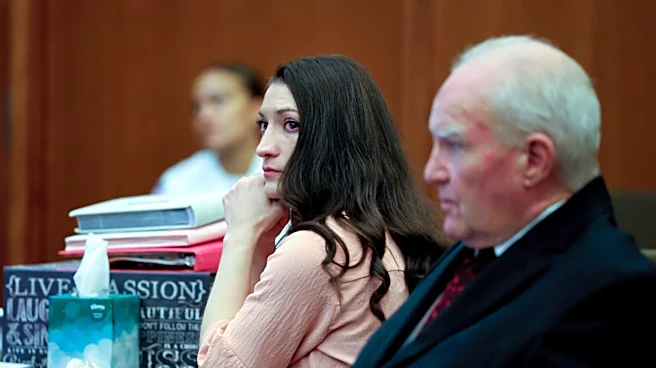
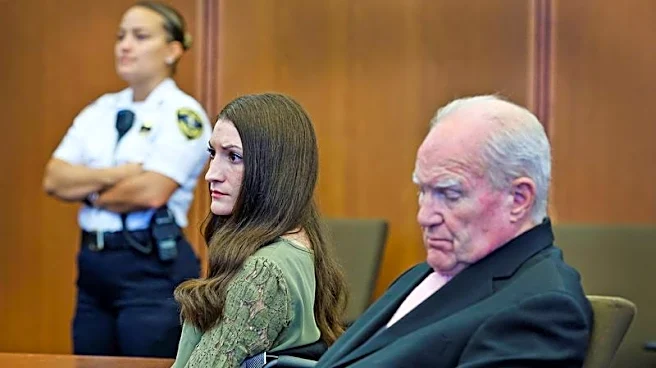
Megyn Kelly has criticized ABC News anchor George Stephanopoulos for his interview with Kevin Reddington, the attorney for Lindsay Clancy. During an appearance on 'Good Morning America,' Reddington directly appealed to President Trump to pardon his client,
who is charged under state law with killing her three children. Kelly expressed incredulity that Stephanopoulos concluded the interview without challenging Reddington on this request. She highlighted that a U.S. President cannot issue a pardon for state-level crimes, making Reddington's appeal legally impossible. Kelly questioned why Stephanopoulos did not ask a follow-up question to clarify this fundamental legal point, suggesting it left viewers confused. Clancy's triple-murder trial recently ended in a mistrial after the jury deadlocked.
Why It's Important?
This incident underscores critical issues in journalistic responsibility and public understanding of the U.S. legal system. Megyn Kelly's criticism points to a perceived failure in holding interview subjects accountable for legally inaccurate statements, especially on a widely viewed national platform like 'Good Morning America.' The inability of a U.S. President to pardon state crimes is a fundamental aspect of the division of powers between federal and state governments. Allowing such a request to go unchallenged could mislead the public about the scope of presidential authority and the legal processes involved in criminal cases. This event also highlights the pressure on journalists to provide accurate context and challenge misinformation, even within the constraints of live television, to ensure informed public discourse.
What's Next?
The criticism from Megyn Kelly could prompt a discussion within media circles about the standards of journalistic inquiry, particularly when legal matters are involved. While Stephanopoulos has not publicly responded to Kelly's remarks, the incident may lead to internal reviews or increased emphasis on fact-checking and follow-up questions during interviews with legal professionals. For Lindsay Clancy's case, the mistrial means the legal proceedings are ongoing, and the focus will likely shift to whether the prosecution will pursue a new trial or a plea agreement. The attorney's unconventional pardon request, despite its legal impossibility, may have been a strategic move to garner public sympathy or attention, but its effectiveness remains to be seen given the legal limitations.
Beyond the Headlines
Beyond the immediate journalistic critique, this event touches upon the broader implications of legal literacy in public discourse and the role of media in shaping it. The attorney's request, even if legally unsound, could be interpreted as an attempt to leverage public sentiment and political influence in a high-profile case. This raises questions about the ethical boundaries of legal advocacy in the media and the responsibility of news outlets to provide accurate legal context. The incident also subtly reinforces the importance of understanding the federalist structure of the U.S. government, where state and federal jurisdictions operate independently. The public's potential confusion highlights a need for clearer communication from both legal professionals and journalists regarding the intricacies of the justice system.