




What's Happening?
ESI Motion Inc. has announced it is supplying Solar Array Drive Electronics (SADE) to Lockheed Martin for its involvement in the Space Development Agency’s (SDA) Proliferated Warfighter Space Architecture (PWSA) programs. This agreement means ESI Motion’s
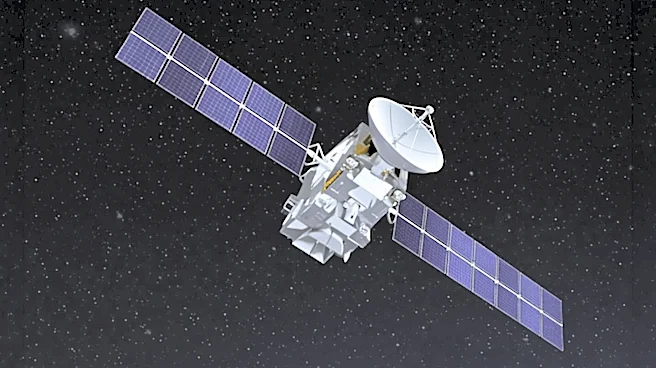
SADE technology will be integral to the development of the PWSA, which aims to provide the military with a robust network of satellites. These satellites are designed to offer secure communication, advanced missile tracking capabilities, and space-based support to ensure U.S. troops have access to the latest technology. The SADE components include ESI Motion’s space-rated, flight-heritage SuperNova and Pulsar motor controllers, which are designed to ensure all mission parameters are met with high reliability. ESI Motion Inc. is a U.S. company with over 20 years of experience supplying mission-critical components to space, military, and industrial customers globally.
Why It's Important?
This collaboration is critical for enhancing U.S. national security and defense capabilities in space. The Space Development Agency's PWSA programs are at the forefront of developing a resilient and advanced satellite network essential for modern warfare and defense strategies. ESI Motion's contribution of specialized SADE technology ensures the reliable operation of solar arrays, which are vital for powering these satellites. The use of flight-heritage components like SuperNova and Pulsar motor controllers underscores the demand for proven, high-reliability technology in space applications, where failure is not an option. This partnership strengthens the domestic supply chain for critical space defense components and supports the broader objective of maintaining technological superiority in space, which is increasingly becoming a contested domain. The PWSA's capabilities in secure communication and missile tracking are fundamental to protecting national assets and personnel.
What's Next?
The immediate next steps involve the integration of ESI Motion’s SADE technology into Lockheed Martin’s systems for the SDA’s PWSA programs. This will entail rigorous testing and validation to ensure seamless functionality and reliability in the demanding space environment. As the PWSA continues to develop, ESI Motion will likely play an ongoing role in supplying these critical components for future satellite deployments within the architecture. The success of these initial integrations could lead to expanded contracts and further collaboration between ESI Motion, Lockheed Martin, and the Space Development Agency. The broader PWSA program will continue its phased deployment, gradually building out the network of satellites to enhance U.S. military capabilities in space, with each successful component integration bringing the full vision closer to reality.
Beyond the Headlines
The supply of SADE components by ESI Motion to the PWSA programs highlights a deeper strategic shift in U.S. defense: the increasing reliance on a proliferated, resilient space architecture. This approach moves away from a few large, high-value satellites to a network of many smaller, more numerous satellites, making the system more robust against attacks and failures. ESI Motion's role, though seemingly specific to solar array drives, is indicative of the intricate ecosystem of specialized U.S. companies contributing to this complex defense strategy. This also underscores the importance of domestic manufacturing and technological independence in critical defense sectors, reducing reliance on foreign suppliers for sensitive components. Furthermore, the continuous innovation in space-rated electronics, like ESI Motion's motor controllers, is essential for pushing the boundaries of what's possible in space defense, ensuring that the U.S. maintains its technological edge in an increasingly competitive and militarized outer space domain. This development also signals a growing market for specialized space technology providers.