
What's Happening?
Journalists in Gaza are facing significant challenges in accessing urgent medical treatment due to the ongoing conflict. Many are injured or suffering from chronic illnesses that require specialized care
unavailable locally. The World Health Organization reports that over 18,500 patients in Gaza need urgent medical evacuation. However, the Rafah crossing, the main route for medical evacuations, is only partially open, limiting the number of patients who can leave for treatment abroad. Journalists like Moaz al-Salhi, who suffers from severe Crohn's disease, are caught in a cycle of medical emergencies without access to necessary treatment.
Why It's Important?
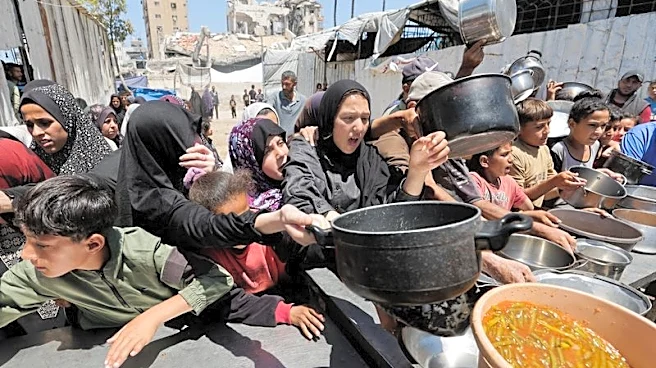
The inability of journalists and other patients in Gaza to access necessary medical care highlights the severe humanitarian crisis in the region. The restrictions on movement and the destruction of healthcare facilities exacerbate the situation, leaving many without life-saving treatment. This not only affects the health and well-being of individuals but also impacts the ability of journalists to report on the conflict, thereby limiting the flow of information to the outside world. The situation underscores the urgent need for international intervention to facilitate medical evacuations and ensure the right to healthcare for all individuals in conflict zones.
What's Next?
The international community, including organizations like the United Nations, may increase pressure on Israel to allow more medical evacuations from Gaza. Humanitarian organizations could also intensify efforts to provide medical supplies and support to the region. The ongoing conflict and humanitarian crisis may lead to further calls for ceasefires or peace negotiations to address the broader issues affecting Gaza. For journalists like al-Salhi, the hope remains for a resolution that allows them to receive the treatment they need and continue their work in documenting the realities of life in Gaza.