







What's Happening?
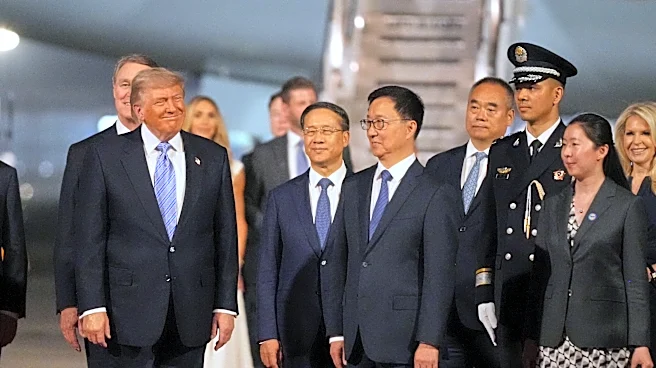
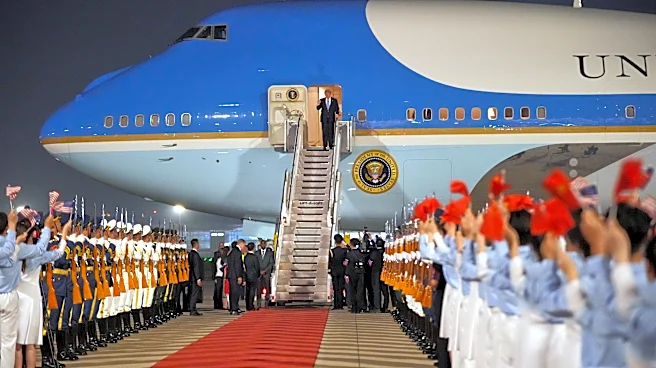
President Trump recently visited Beijing, where he met with Chinese President Xi Jinping. The visit was marked by ceremonial displays, including parading troops and a banquet, but lacked substantial diplomatic outcomes. The meeting aimed to stabilize
the US-China relationship rather than shift it significantly. This visit follows a period of heightened tensions, including the imposition of tariffs by both nations and China's restrictions on rare earth exports. The US has been attempting to diversify its sources of rare earths and has shifted some military focus from Asia to the Middle East. The meeting was described as a 'milestone' by President Xi, though it is seen more as a marker in ongoing diplomatic efforts rather than a breakthrough.
Why It's Important?
The US-China relationship is crucial for global economic and political stability. The lack of substantial progress during President Trump's visit underscores the ongoing challenges in US-China diplomacy. The US's reliance on Chinese rare earths and the strategic importance of these materials highlight vulnerabilities in supply chains. The meeting's focus on stabilizing relations rather than achieving significant policy shifts suggests a cautious approach by both nations. This diplomatic stalemate could impact global markets and international relations, as both countries are major players on the world stage. The US's strategy to 'de-risk' supply chains and control technology exports reflects concerns over long-term national security and economic competitiveness.
What's Next?
Future diplomatic engagements between the US and China will likely continue to focus on stabilizing relations while addressing specific economic and security concerns. The US may pursue alternative sources for critical materials and tighten controls on technology exports. China's recent actions, such as ordering Meta to unwind its purchase of a Chinese AI firm, indicate its intent to protect its technological advancements. Both nations are expected to continue their strategic maneuvers, balancing short-term economic gains with long-term security interests. The international community will closely watch these developments, as they have significant implications for global trade and security dynamics.
Beyond the Headlines
The US-China relationship is not only about economic and military power but also involves cultural and ideological dimensions. China's view of US hegemony as unsustainable and its ambitions for restored greatness reflect deeper geopolitical shifts. The US's internal challenges, such as political polarization and economic disparities, may influence its foreign policy decisions. Meanwhile, China's approach to foreign policy, historically characterized by patience and strategic planning, may evolve as it assumes a more prominent global role. These underlying factors will shape the future trajectory of US-China relations and their impact on the world.