



What's Happening?
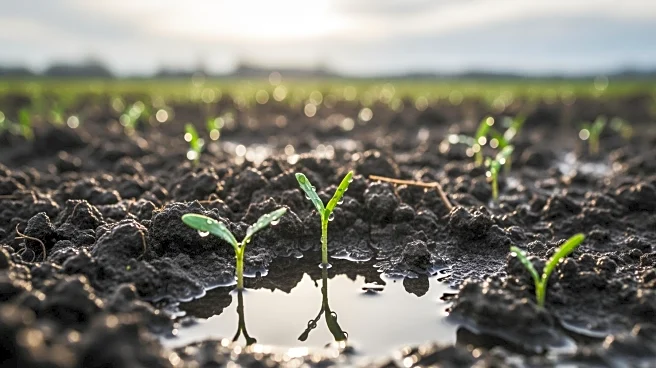
A significant cloudburst occurred near Bloemfontein, South Africa, resulting in over 70mm of rain falling within an hour. This event took place on December 11, 2025, and has left fields along the R64 between Bloemfontein and Dealesville resembling mud
ponds. Clinton Bukes, a pilot with Bassair Aviation, reported the heavy rainfall after flying over the area to assess the water levels. The rain has been part of a good summer rainfall season for Bloemfontein, although it falls unevenly across the district. Gernie Botha, CEO of Free State Agriculture, noted that some farmers have experienced more rainfall than others, highlighting the patchy nature of the precipitation.
Why It's Important?
The heavy rainfall in Southern Africa, particularly near Bloemfontein, is significant for the agricultural sector, which relies heavily on weather conditions for crop production. The uneven distribution of rain can lead to challenges in farming, as some areas may experience flooding while others remain dry. This can affect crop yields and the overall agricultural output, impacting food supply and economic stability in the region. The situation underscores the importance of effective water management and infrastructure to mitigate the effects of such weather events on agriculture.
What's Next?
Farmers in the affected areas will need to assess the damage caused by the heavy rainfall and adjust their farming practices accordingly. This may involve implementing better drainage systems or altering planting schedules to accommodate the wet conditions. Additionally, local agricultural authorities may need to provide support and resources to help farmers recover from any losses incurred due to the rain. Monitoring weather patterns and preparing for future events will be crucial in minimizing the impact on agriculture.
Beyond the Headlines
The recent rainfall highlights the broader issue of climate variability and its impact on agriculture. As weather patterns become more unpredictable, farmers may face increased challenges in maintaining consistent crop production. This situation calls for innovative solutions and technologies to enhance resilience against climate-related disruptions. Furthermore, it emphasizes the need for regional cooperation in developing strategies to address the effects of climate change on agriculture.