







What's Happening?
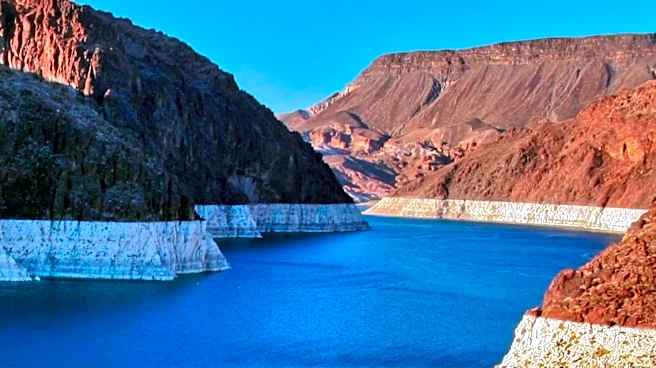
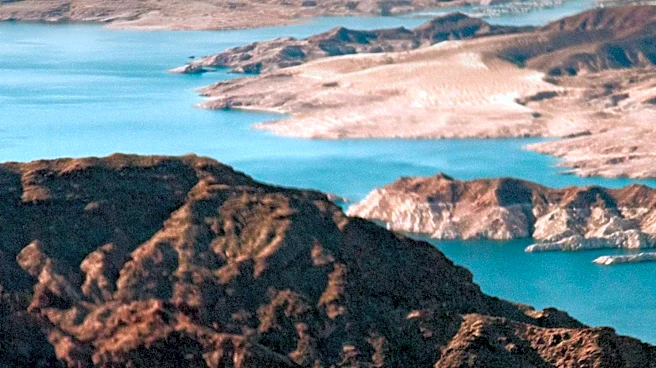
Southern California is set to receive up to $65 million from the federal government to conserve water in Lake Mead, as the reservoir faces historically low levels. The Metropolitan Water District of Southern California has agreed to leave 200,000 acre-feet
of its Colorado River supplies in the lake. This initiative is part of a broader federal effort to address water shortages exacerbated by climate change and prolonged droughts. The funding comes from the 2022 Inflation Reduction Act's conservation program.
Why It's Important?
The agreement highlights the severe water crisis affecting the Colorado River Basin, which supplies water to millions in the Southwest. The conservation efforts are crucial for maintaining water levels in Lake Mead, which is vital for water supply and hydroelectric power generation. The initiative reflects the growing need for sustainable water management practices in the face of climate change, impacting agriculture, energy, and urban planning in the region.
What's Next?
The Metropolitan Water District's agreement is a temporary measure, and long-term solutions will require collaboration among the seven Colorado River Basin states. Future negotiations will focus on sustainable water use and conservation strategies to prevent further declines in water levels. Stakeholders will need to address the economic and environmental impacts of water shortages, with potential policy changes and infrastructure investments on the horizon.
Beyond the Headlines
The water crisis in the Colorado River Basin underscores the broader implications of climate change on natural resources. It raises ethical and legal questions about water rights and the responsibilities of states and federal agencies in managing shared resources. The situation also highlights the need for innovative solutions and public awareness to address the challenges of water scarcity and environmental sustainability.