

What's Happening?
Nevada has filed a lawsuit against the Trump administration's ten-year plan for stabilizing the use of the Colorado River, citing fears of 'catastrophic impacts' from proposed water cuts. The lawsuit, filed in the U.S. District Court of Nevada, seeks
to revoke the federal Bureau of Reclamation's plan. Nevada officials argue that the plan unfairly targets Nevada, Arizona, and California, requiring them to cut water use by approximately 20 percent over the next two years, with potential for more substantial cuts in the future. In contrast, Colorado, Utah, New Mexico, and Wyoming would not face mandatory reductions. John Entsminger, general manager of the Southern Nevada Water Authority, stated that the long-term impacts could be devastating for southern Nevada, where the Colorado River supplies 90 percent of the water for 76 percent of the state's population. Nevada Governor Joe Lombardo emphasized that this is a matter of survival for the community and its economy.
Why It's Important?
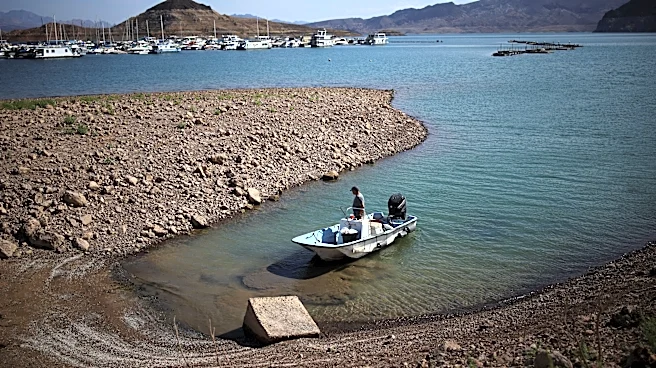
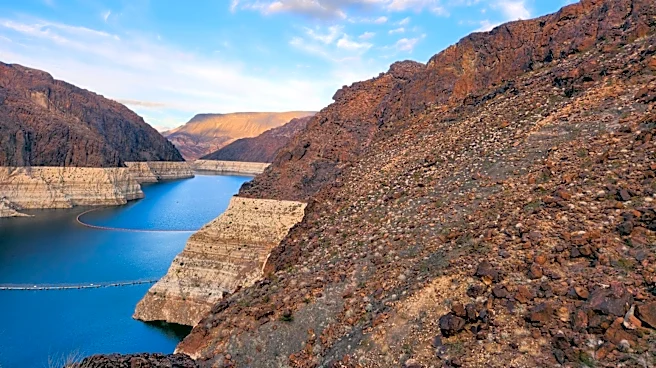
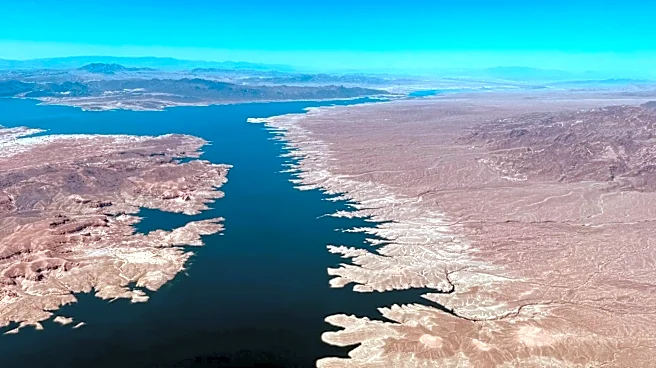
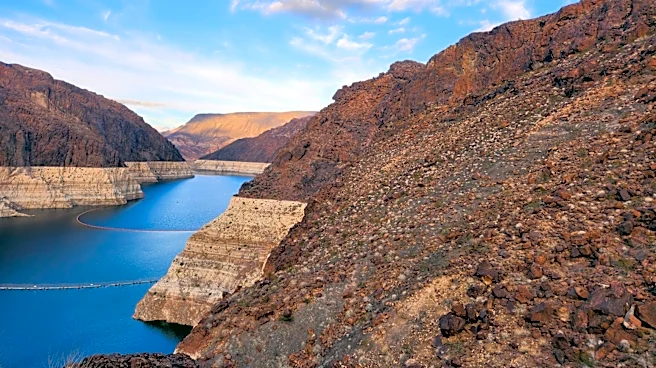
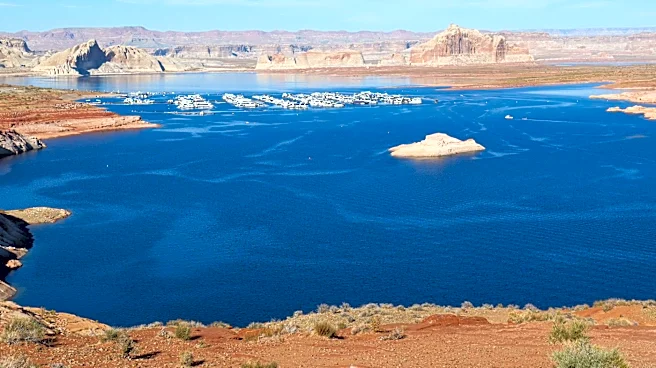
This lawsuit is important because it marks the first legal challenge to the Trump administration's Colorado River plan, highlighting deep divisions among the seven states that rely on the river. The Colorado River is a critical water source for 35 to 40 million people across these states, 30 Native tribes, and two Mexican states, as well as supporting approximately 5 million acres of farmland. The proposed cuts, particularly for Nevada, could severely impact its economy and population centers like Las Vegas, which are heavily dependent on the river. The dispute underscores the escalating water scarcity issues in the Western U.S., exacerbated by a historic 26-year drought and climate change, which have led to record low levels in Lake Mead and Lake Powell. The legal battle could set precedents for future water allocation policies and interstate water rights, potentially influencing how other shared natural resources are managed in the face of environmental challenges.
What's Next?
The lawsuit will proceed through the U.S. District Court of Nevada, with the potential for a lengthy legal battle that could ultimately reach the Supreme Court. Experts anticipate that Arizona and California might join Nevada in the suit, further solidifying the opposition to the Trump administration's plan. While the lawsuit is pending, the Department of the Interior will likely continue to operate the Colorado River and its infrastructure to ensure water supply to all states. However, the legal challenge could complicate and prolong negotiations among the states and the federal government to find a mutually agreeable solution. The Southern Nevada Water Authority's general manager, John Entsminger, expressed hope that the lawsuit would compel parties to reach an out-of-court agreement, emphasizing the need for a solution that all states can live with, even if it's not ideal for everyone. The outcome will significantly shape water management and resource allocation in the American West for decades.
Beyond the Headlines
The Nevada lawsuit against the Trump administration's Colorado River plan delves into profound ethical and environmental considerations beyond immediate water allocation. It highlights the inherent tension between historical water rights, established by the 1922 compact, and the realities of a changing climate that has drastically reduced the river's natural flow. The case forces a re-evaluation of how water resources are managed in an era of persistent drought and climate change, questioning whether existing legal frameworks are adequate to address current ecological challenges. The disproportionate impact on downstream states like Nevada, Arizona, and California, compared to upstream states, raises issues of environmental justice and equitable resource distribution. This legal challenge could catalyze a broader national conversation about sustainable water management practices, the role of federal intervention in interstate resource disputes, and the necessity of adapting to new climatic norms rather than relying solely on historical precedents. It also underscores the economic vulnerability of regions heavily reliant on a single, diminishing resource.