






What's Happening?
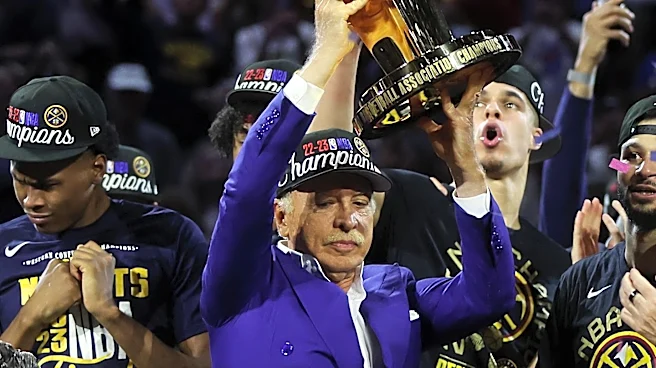
Stan Kroenke, founder of Kroenke Sports & Entertainment, has significantly expanded his land holdings in Montana, now totaling 331,000 acres. This makes him one of the largest private landowners in the state. His Montana properties include the 119,000-acre
Broken O Land & Livestock ranch, acquired in 2012, and the 117,000-acre PV Ranch, purchased in 2002, along with several smaller parcels. Kroenke's diverse portfolio also includes stakes in seven professional sports teams and six sports stadiums across the U.S. and U.K. He is married to Walmart heiress Ann Walton Kroenke. The Montana Free Press's analysis indicates that the top 10 private landowners in Montana collectively own approximately 2.5 million acres, which accounts for about 2.7% of the state's total land area. This is in contrast to the federal government's ownership of roughly 27 million acres and the state of Montana's 5.7 million acres.
Why It's Important?
The extensive land ownership by individuals like Stan Kroenke has significant implications for land use, conservation, and economic development in Montana. Large private holdings, particularly those primarily engaged in agriculture, timber, or conservation, influence local economies, employment, and environmental policies. The concentration of land in the hands of a few private entities can impact public access to natural resources, wildlife management, and the overall character of rural communities. While some large landowners, like conservation organizations, focus on preserving natural landscapes, others may pursue ventures such as wind energy projects or subdivisions, altering the traditional agricultural and wilderness landscape. The scale of these private holdings, though substantial, remains dwarfed by federal and state land ownership, highlighting the complex mosaic of land management in Montana.
What's Next?
The ongoing trend of large-scale private land acquisition in Montana suggests continued discussions and potential policy considerations regarding land use and conservation. Future developments could involve further expansion of these holdings, changes in land management practices by these large owners, or increased scrutiny from environmental groups and local communities. The balance between private property rights, public access, and conservation efforts will likely remain a key area of focus. As the state's demographics and economic drivers evolve, the influence of major landowners like Kroenke on Montana's future landscape and resource management will continue to be a relevant topic for stakeholders, including state agencies, local governments, and residents.
Beyond the Headlines
The accumulation of vast tracts of land by wealthy individuals like Stan Kroenke raises broader questions about wealth distribution, land stewardship, and the evolving nature of the American West. Beyond the immediate economic impacts, such large-scale ownership can influence cultural identity, traditional land uses, and the long-term ecological health of regions. The ethical dimensions of private control over significant natural resources, including water rights and wildlife habitats, often come into play. This trend also highlights the intersection of sports, entertainment, and real estate, as successful entrepreneurs diversify their investments into tangible assets like land. The long-term implications could include shifts in rural economies, increased pressure on public lands, and ongoing debates about the role of private wealth in shaping the nation's natural heritage.