
What's Happening?
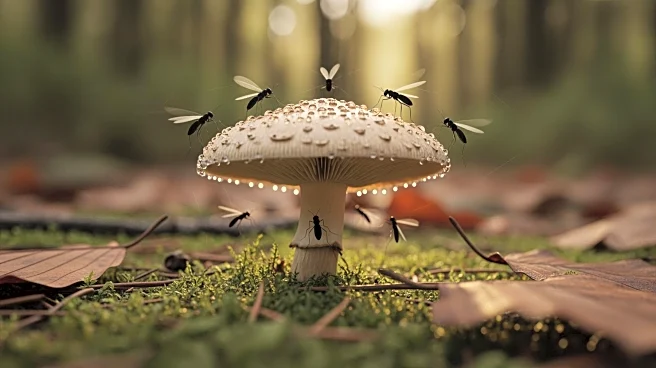
Recent research indicates that the psychoactive compound psilocybin, found in magic mushrooms, may have evolved as a defense mechanism against insects. The study, conducted by researchers at the University
of Plymouth, involved feeding fruit fly larvae with food containing psilocybin. Results showed that larvae exposed to the compound had lower survival rates and exhibited developmental stress, such as smaller body sizes and asymmetrical wings. The findings suggest that psilocybin interferes with insect physiology, potentially deterring them from consuming the fungi. This research provides new insights into the ecological role of psilocybin and its evolutionary benefits for fungi.
Why It's Important?
Understanding the evolutionary purpose of psilocybin could have significant implications for both ecological studies and the development of new pest control methods. By identifying natural compounds that deter insects, researchers could explore environmentally friendly alternatives to chemical pesticides. Additionally, the study contributes to the broader understanding of how psychoactive compounds affect different species, which could inform future research into the therapeutic uses of psilocybin for mental health conditions. The findings also highlight the complex interactions between fungi and their environments, offering a deeper appreciation of biodiversity and evolutionary biology.