









What's Happening?
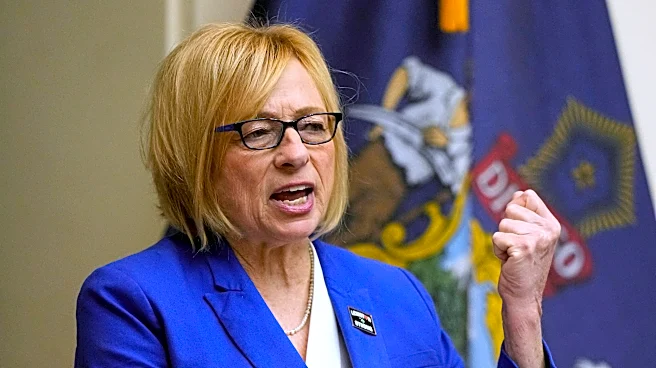
Janet Mills, the two-term governor of Maine, has announced the end of her Senate campaign due to financial difficulties. Despite having significant Democratic support, Mills struggled to raise sufficient funds, leading to her withdrawal from the race.
This development positions Graham Platner, a progressive newcomer, as the presumptive Democratic nominee. Platner's candidacy has been marked by controversy, including past remarks and personal history, yet he has gained traction among voters. The race now sets the stage for a competitive contest against incumbent Republican Senator Susan Collins, who has a strong track record in Maine politics.
Why It's Important?
Mills' withdrawal from the Senate race highlights the challenges faced by traditional candidates in the current political climate. Her exit underscores the growing influence of progressive candidates who resonate with voters seeking change. This shift could impact the Democratic Party's strategy in upcoming elections, as it navigates internal divisions and the need to appeal to a broader electorate. The race also has national implications, as control of the Senate is crucial for advancing legislative agendas. Platner's candidacy, despite his controversial background, reflects a willingness among voters to prioritize new voices over established figures.
What's Next?
With Mills out of the race, the focus shifts to the general election, where Platner will face Collins. The contest is expected to be intense, with significant resources likely to be invested by both parties. Collins' campaign will likely emphasize her experience and track record, while Platner will aim to capitalize on his outsider status and appeal to progressive voters. The outcome of this race could influence the balance of power in the Senate and shape future legislative priorities. Additionally, the Democratic Party may need to reassess its candidate recruitment and support strategies to better align with voter sentiments.