



What's Happening?
Turkey has presented a new draft memorandum to Russia and Ukraine aimed at stopping attacks on civilian ships in the Black Sea. This proposal, confirmed by a Turkish diplomat to AFP, seeks to establish a secure grain corridor, drawing inspiration from
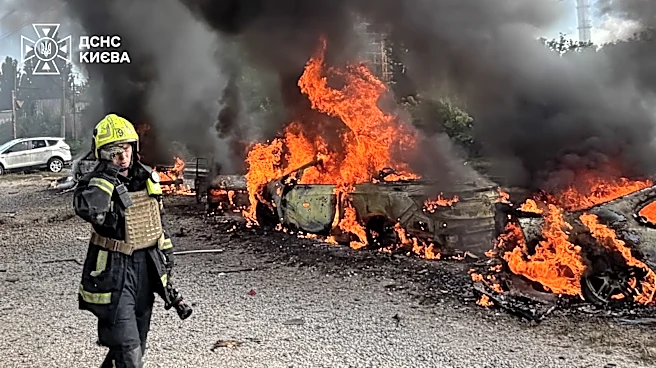
the 2022 agreement that facilitated the safe export of Ukrainian grain. The core of the new initiative involves utilizing the territorial waters of coastal states, including Romania, Bulgaria, Georgia, and Turkey, with their consent, to ensure ships can traverse the entire route without entering international waters. This move comes in response to a significant increase in drone attacks on merchant vessels; industry sources indicate at least 25 ships linked to Turkish owners have been affected since late June, with four sailing under the Turkish flag. Turkish Foreign Minister Hakan Fidan previously called for a moratorium on attacks against civilian ships on August 8, but this appeal did not yield a practical response from either party. The proposal has been sent to both Russia and Ukraine, and Ankara is currently awaiting their responses.
Why It's Important?
The establishment of a secure Black Sea grain corridor is crucial for global food security, as Ukraine is a major agricultural producer and exporter, historically supplying up to 10% of the world's total wheat exports. The ongoing attacks on civilian ships and port infrastructure in the Black Sea disrupt supply chains, leading to higher prices and increased food insecurity, particularly in Africa, the Middle East, and Asia. The current situation could escalate into a more severe crisis than in 2022, when the initial Black Sea grain initiative was implemented. Without a fully effective alternative to Black Sea shipping for grains, the world faces significant challenges in maintaining stable food supplies. Turkey's proposal, by aiming to protect shipping routes, could help stabilize global food markets, reduce humanitarian risks, and potentially de-escalate tensions in the region. The success of this initiative would benefit countries reliant on Ukrainian grain and contribute to broader economic stability.
What's Next?
Turkey is currently awaiting responses from both Russia and Ukraine regarding the proposed memorandum. Turkish President Recep Tayyip Erdogan has expressed his intention to discuss the restoration of the grain corridor format with Russian President Vladimir Putin in November, indicating a high-level diplomatic push for the initiative. Should both parties agree to the proposal, the next steps would involve detailed negotiations to formalize the use of territorial waters and establish monitoring mechanisms to ensure the safety of civilian ships. The involvement of other coastal states like Romania, Bulgaria, and Georgia would also require their consent and cooperation. If the deal is successful, it could lead to a resumption of more consistent and secure grain exports from Ukraine, potentially easing global food prices and supply concerns. Conversely, a lack of agreement could prolong the current instability, leading to continued attacks and further disruptions to international trade.
Beyond the Headlines
This Turkish initiative highlights the complex geopolitical tightrope Ankara walks, maintaining relations with both Kyiv and Moscow while being a NATO member. Turkey's refusal to join Western sanctions against Russia allows it a unique position to mediate such agreements. The proposal also underscores the evolving nature of maritime warfare, with drone attacks on merchant ships becoming a significant threat to international shipping and trade. The reliance on territorial waters rather than international waters for safe passage reflects an innovative approach to circumventing conflict zones, potentially setting a precedent for future maritime security challenges in other contested regions. The human dimension of this conflict, particularly the impact on global food security, emphasizes the interconnectedness of international relations and humanitarian concerns, where regional conflicts can have far-reaching consequences for millions worldwide.