





What's Happening?
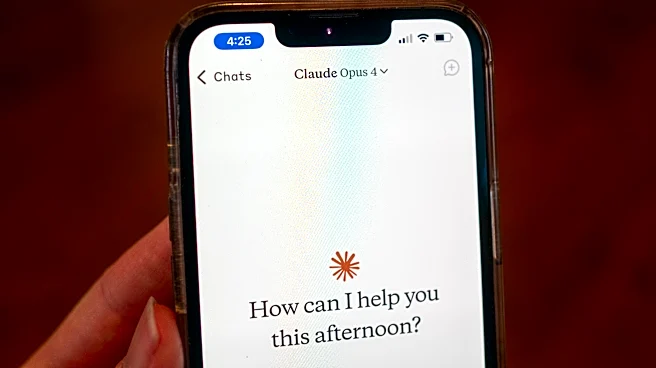
AI chatbots are increasingly being utilized as a tool for emotional support, particularly among men who may be less inclined to seek traditional mental health services. According to STAT, thousands of mental health apps, including major teletherapy platforms
like Talkspace, now integrate AI elements. Researchers and developers are exploring AI's potential to engage men who are skeptical, busy, or constrained by gender norms, by offering a non-judgmental and accessible conversational outlet. A Pew Research Center survey indicated that 8% of men use chatbots for emotional support and 4% for companionship, with 9% reporting improved happiness from chatbot use. This trend is driven by the perceived flexibility, lack of structure, and 24/7 availability of AI companions, which can reduce the stigma associated with traditional therapy. While not a replacement for professional human therapists, these AI tools provide an alternative for initial engagement with mental health concerns.
Why It's Important?
The emergence of AI chatbots in mental health care holds significant implications for addressing the long-standing crisis in men's mental health. Men account for up to 80% of suicide deaths but are nearly half as likely as women to receive mental health treatments. This disparity is often attributed to social norms around masculinity, stigma, and practical barriers like scheduling. AI chatbots offer a low-barrier entry point, potentially reaching individuals who would otherwise not seek help. By providing a private, non-judgmental space, these tools can help men explore challenging thoughts and feelings, recognize patterns in symptoms, and reflect on progress. This innovation could lead to earlier intervention and improved mental well-being for a demographic that has historically been underserved by mental health services, thereby reducing the societal and economic burden of untreated mental health conditions.
What's Next?
The future of AI chatbots in mental health will likely involve continued research into their long-term effectiveness and potential risks. John Torous, a professor of psychiatry at Beth Israel Deaconess Medical Center and Harvard Medical School, emphasizes the need for high-quality evidence and transparency regarding their impact. There are ongoing efforts to understand whether the improved mental state reported by users is temporary relief or leads to lasting benefits. Additionally, the regulatory landscape for mental health AI is still developing. While the Food and Drug Administration has signaled an intention to address this, specific federal guidelines are yet to be established. This regulatory clarity will be crucial for ensuring user safety and establishing standards for these evolving technologies, particularly concerning potential harms like direct dangerous advice or the blurring of definitions in user-bot relationships.
Beyond the Headlines
Beyond their immediate utility, AI chatbots raise deeper ethical and psychological questions about the nature of human connection and therapeutic relationships. The ability to interact with an ever-present, non-judgmental AI companion could alter how individuals seek and receive emotional support, potentially impacting their interactions with family and friends. Concerns exist about whether extensive reliance on AI could limit human social engagement or foster unhealthy dependencies. The lack of traditional therapeutic boundaries in AI interactions also presents a unique challenge. While some developers are integrating safety tools, the vetting process and the potential for conflicts of interest in self-regulation remain areas of concern. The long-term societal implications of widespread AI mental health support, including its effect on human empathy and the definition of 'care,' will require ongoing scrutiny and discussion.