







What's Happening?
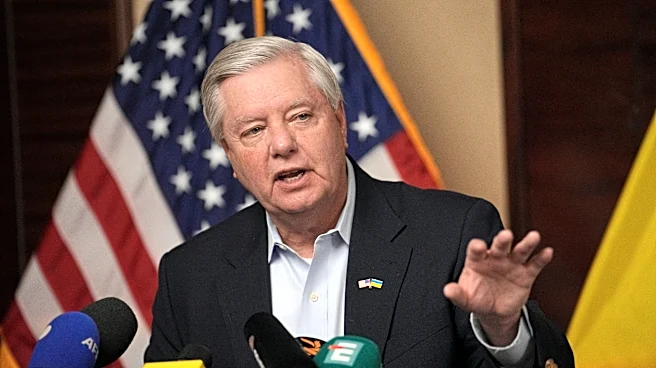
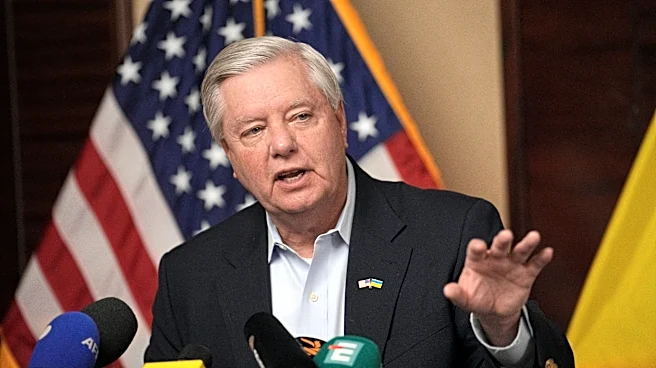
Senator Lindsey Graham, a prominent figure in American politics known for his advocacy of military strength and his transformation from a critic to an ally of President Trump, has died at the age of 71. The Washington, D.C., medical examiner reported
that Graham's death was due to a rupture in his aorta. Graham, who had recently returned from a trip to Ukraine, was scheduled to discuss a new sanctions package against Russia on NBC's 'Meet the Press'. His death has prompted tributes from political figures across the spectrum, highlighting his influence and ability to connect with colleagues of differing political views. Graham's career was marked by his Southern roots, military service, and a significant role in the impeachment of President Bill Clinton.
Why It's Important?
Lindsey Graham's death marks the end of a significant era in U.S. politics, particularly in the Senate where he was known for his bipartisan efforts and influence on foreign policy. His ability to navigate political alliances, notably his shift from a 'Never Trump' critic to a staunch supporter of President Trump, underscores the complex dynamics within the Republican Party. Graham's passing may impact ongoing political strategies, especially those related to foreign policy and military affairs, areas where he was particularly vocal. His death also leaves a vacancy in the Senate, potentially affecting the balance of power and the legislative agenda.
What's Next?
In the wake of Graham's death, there will likely be a period of mourning and reflection among his colleagues and constituents. The process to fill his Senate seat will be closely watched, as it could influence the political landscape in South Carolina and the broader national scene. Additionally, Graham's absence may lead to shifts in the Senate's approach to foreign policy and military issues, areas where he was a key player. Political leaders and parties will need to navigate these changes while honoring Graham's legacy and contributions.
Beyond the Headlines
Graham's life story, from his humble beginnings in South Carolina to his rise in national politics, reflects broader themes of American opportunity and resilience. His career also highlights the evolving nature of political alliances and the role of personal relationships in governance. As a figure who often bridged partisan divides, Graham's legacy may serve as a reminder of the potential for collaboration in a polarized political environment. His influence on military and foreign policy decisions will likely be studied and debated in the context of U.S. strategic interests.