

What's Happening?
A federal appeals court has decided to revive a lawsuit against DeRay Mckesson, a prominent Black Lives Matter activist, which has sparked concerns over First Amendment rights. The case stems from a 2016 protest in Baton Rouge, Louisiana, organized by
Mckesson following the police shooting of Alton Sterling. During the protest, police officer John Ford was injured by an object thrown by an unknown individual. The lawsuit accuses Mckesson of negligence in leading the protest. A three-judge panel from the Fifth Circuit Court of Appeals ruled 2-1 in favor of allowing the lawsuit to proceed to a jury trial. The dissenting judge expressed concerns that this decision could threaten First Amendment liberties, as it might hold protest organizers accountable for the actions of others. Mckesson, who gained national attention during the 2014 Ferguson protests after the shooting of Michael Brown, has criticized the lawsuit as an attempt to silence protestors.
Why It's Important?
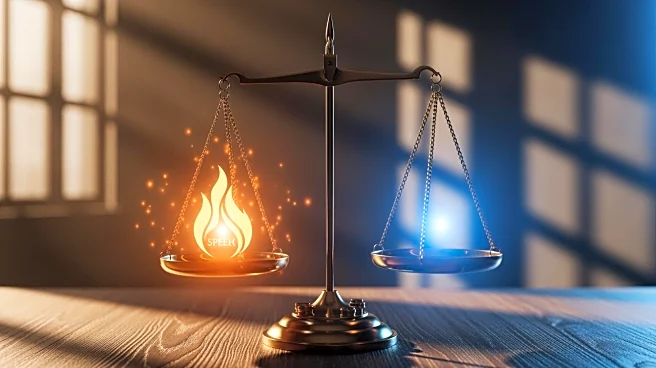
The decision to allow the lawsuit against Mckesson to proceed has significant implications for First Amendment rights in the United States. It raises questions about the extent to which protest organizers can be held liable for the actions of participants, potentially setting a precedent that could deter individuals from organizing or participating in protests. This case highlights the ongoing tension between law enforcement and civil rights activists, particularly in the context of protests against police violence. The outcome of this lawsuit could impact future protests and the legal responsibilities of those who organize them, affecting how civil liberties are exercised in the U.S.
What's Next?
As the lawsuit moves forward to a jury trial, both sides are likely to prepare their arguments regarding the responsibilities of protest organizers. Mckesson's legal team, supported by the American Civil Liberties Union, is expected to continue advocating for the protection of First Amendment rights. The trial will likely draw significant public attention, as it could influence future legal standards for protest-related cases. The decision may also prompt legislative discussions on how to balance public safety with the right to protest.