


What's Happening?
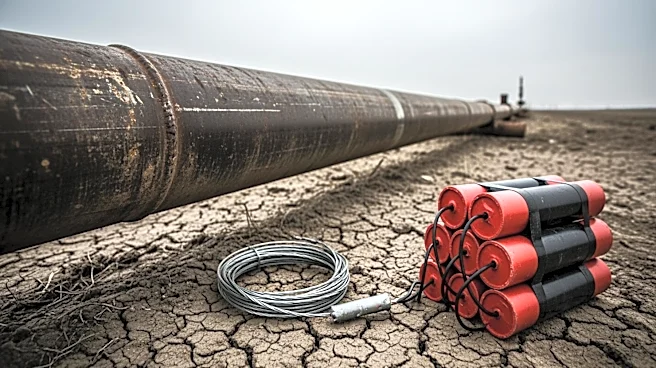
Two backpacks containing explosives were discovered near a gas pipeline in Serbia, close to the Hungarian border. This pipeline is crucial as it carries Russian gas, and both Serbia and Hungary heavily rely on these supplies. Serbian President Aleksandar
Vucic announced the discovery, noting that the explosives were found just a few hundred meters from the pipeline in Kanjiza, northern Serbia. The incident has prompted a significant police presence, including roadblocks and helicopters. Vucic has informed Hungarian Prime Minister Viktor Orban about the investigation's initial findings. The origin of the explosives remains unclear, but Vucic mentioned there are 'certain traces' that cannot be disclosed at this time. The discovery comes amid heightened tensions in the region, with Hungary's Prime Minister Orban warning of an impending energy crisis due to the Middle East conflict and calling for the EU to lift sanctions on Russian energy imports.
Why It's Important?
The discovery of explosives near a critical gas pipeline underscores the vulnerability of energy infrastructure in Europe, particularly in countries like Serbia and Hungary that are heavily dependent on Russian energy supplies. This incident could exacerbate existing tensions between these nations and the European Union, which is seeking to reduce reliance on Russian energy. The situation also highlights the geopolitical complexities involving Russia, as both Serbia and Hungary maintain strong ties with Moscow. The potential disruption of gas supplies could have significant economic and political ramifications, not only for the countries directly involved but also for the broader European energy market. Additionally, the timing of the incident, amid Hungary's election campaign, adds a layer of political intrigue, potentially influencing voter sentiment and international relations.
What's Next?
In response to the discovery, Hungarian Prime Minister Viktor Orban is expected to convene an emergency defense council meeting. The investigation into the origin and intent of the explosives will likely continue, with both Serbian and Hungarian authorities collaborating to ensure the security of the pipeline. The incident may prompt increased security measures around critical infrastructure in the region. Additionally, the situation could influence ongoing discussions within the European Union regarding energy policy and sanctions on Russia. As Hungary approaches its national elections, the handling of this security threat could impact Orban's political standing and the outcome of the vote.