



What's Happening?
A significant winter storm is affecting travel plans across the Northeast, prompting major airlines to waive change fees for passengers. American Airlines, Delta Air Lines, United Airlines, Southwest Airlines, and JetBlue Airways are among the carriers
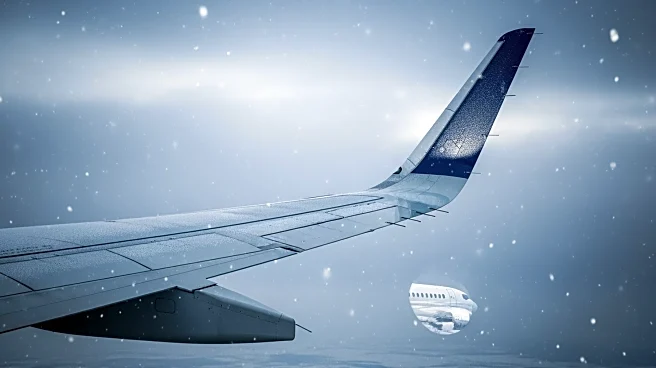
allowing travelers to alter their flights without incurring additional charges. This policy applies to restrictive basic economy tickets for flights in and out of key airports, including Philadelphia International Airport, New York's John F. Kennedy International Airport, and Newark Liberty International Airport. The National Weather Service has issued a winter storm warning for New York City, New Jersey, and Long Island, with snowfall expected to reach up to 9 inches. The airlines have advised customers to complete their travel by the end of the year if they choose to change their flights, as seat availability is limited during the busy holiday season.
Why It's Important?
The decision by airlines to waive change fees is crucial for maintaining customer satisfaction and operational efficiency during one of the busiest travel periods of the year. With Airlines for America predicting a record 52.6 million passengers between December 19 and January 5, the storm poses a significant challenge to airline operations. By allowing flexible travel arrangements, airlines aim to mitigate disruptions and manage passenger flow more effectively. This move also highlights the airlines' responsiveness to weather-related challenges, which can have substantial economic implications for both the carriers and the broader travel industry. Travelers benefit from the flexibility, potentially avoiding the stress and financial burden of last-minute changes due to weather conditions.
What's Next?
As the storm progresses, airlines will continue to monitor weather conditions and adjust their operations accordingly. Passengers are encouraged to stay informed about their flight status and consider traveling earlier to avoid potential delays. The airlines' proactive measures may set a precedent for handling similar situations in the future, emphasizing the importance of customer-centric policies in the face of unpredictable weather events. Additionally, the response from airlines may influence future regulatory discussions on passenger rights and airline responsibilities during weather disruptions.