
What's Happening?
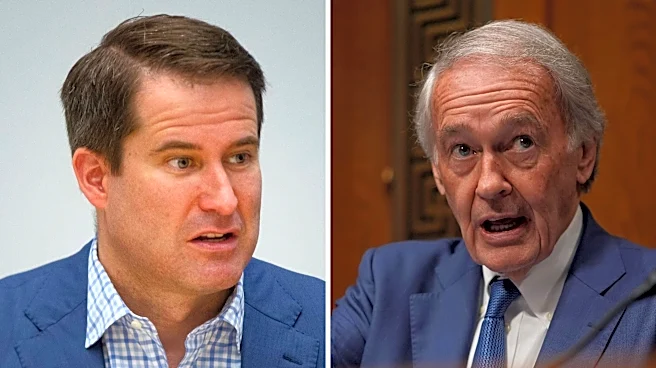
Senator Ed Markey, an 80-year-old incumbent, is facing a primary challenge from 47-year-old Representative Seth Moulton in Massachusetts. Moulton has centered his campaign on the argument that Markey is too
old to serve another term, advocating for age limits in Congress. This dynamic reverses a common trend where younger progressive insurgents challenge older incumbents. Markey, despite his age, is positioned as the progressive voice, having secured endorsements from prominent progressive figures like Bernie Sanders and Elizabeth Warren. During a recent debate, Markey directly addressed the age issue, asserting his energy and commitment to fighting for families. Moulton, however, criticized Markey's understanding of technology, specifically artificial intelligence, after Markey stated he uses 'whatever is inside of my iPhone and my iPad – whatever comes up' when asked about AI platforms like ChatGPT. Moulton argued this demonstrated a need for a new generation of leaders to regulate technology effectively.
Why It's Important?
This primary election highlights a significant debate within U.S. politics regarding age and leadership, particularly within the Democratic Party. While there's a growing sentiment against elderly leaders, often labeled as 'gerontocracy,' Markey's strong progressive credentials appear to be outweighing age concerns for many voters. The outcome in Massachusetts could indicate whether ideological alignment or generational change is a more potent factor for progressive voters. The discussion around Markey's grasp of technology, specifically AI, also underscores the increasing importance of technological literacy for elected officials in an era of rapid digital advancement. This race could influence future campaign strategies, particularly how candidates address age and technological competence, and whether voters prioritize experience and established progressive stances over calls for new, younger leadership.
What's Next?
Massachusetts voters will decide the outcome of this primary election. Polls suggest Markey is poised to win, with an Emerson College Polling survey indicating a significant lead over Moulton. If Markey secures re-election, it would challenge the narrative of a widespread backlash against older leaders in the Democratic Party. The campaign's focus on age and technological understanding may prompt other older politicians to more proactively address these concerns. The results will also be closely watched by national political strategists to gauge the effectiveness of age-based campaign arguments and the enduring appeal of established progressive figures. The debate over age limits for serving in Congress, brought up by Moulton, is likely to continue, potentially gaining more traction depending on the outcomes of similar races across the country.
Beyond the Headlines
The Massachusetts primary delves into deeper societal questions about the value of experience versus the need for fresh perspectives in leadership. The 'gerontocracy' debate extends beyond individual elections, touching upon the broader implications of an aging political class on policy innovation and responsiveness to contemporary challenges. Markey's success, if it materializes, could suggest that for a significant segment of the electorate, a proven track record of progressive policy advocacy and ideological consistency trumps concerns about age. Conversely, Moulton's emphasis on technological literacy highlights a growing concern that some older leaders may be out of touch with critical emerging technologies, potentially impacting their ability to legislate effectively in areas like AI regulation. This election serves as a microcosm of the ongoing tension between tradition and modernity in American political leadership.