


What's Happening?
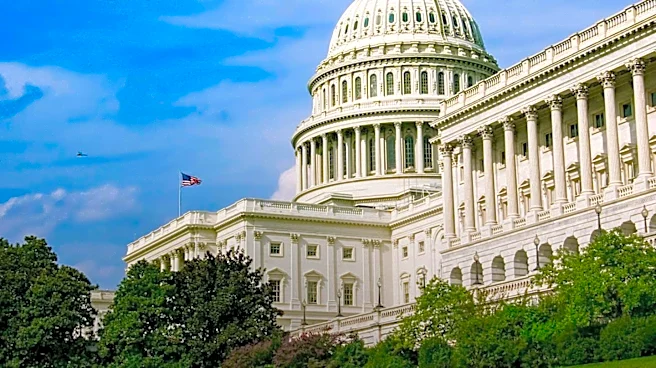
U.S. Senator Steve Daines introduced S. 4489, the Dry-Redwater Regional Water Authorization Act, on May 12, 2026, during the 119th Congress. This bill, co-sponsored by U.S. Tim Sheehy, aims to provide the necessary federal approval for the Dry-Redwater Regional Water Authority
(DRWA) to proceed with its water project. Concurrently, U.S. Representative Troy Downing introduced an identical bill, H.R. 8745, in the House. Both bills have been referred to their respective committees: the Senate Committee on Energy and Natural Resources and the House Committee on Natural Resources. The DRWA project, which received a concluding report from the Bureau of Reclamation in December 2025, seeks to deliver high-quality water from the Missouri River to approximately 1,500 rural households and several towns in Montana, including Jordan, Circle, Richey, Lambert, Savage, Glendive, and Fallon. The project also plans to install pasture taps for the livestock industry. Connection to the DRWA system will be voluntary, and existing water sources can be retained by users. Hearings for both bills are anticipated in the fall, with full votes expected before the end of the year.
Why It's Important?
The passage of the Dry-Redwater Regional Water Authorization Act is crucial for addressing long-standing issues of water access and quality in a five-county service area in Montana. This project is designed to provide a reliable source of treated water from the Missouri River, which is vital for ranchers, farmers, businesses, and essential service providers like schools and clinics. The federal authorization will unlock funding for the design and construction of critical infrastructure, including a surface water intake, a state-of-the-art water treatment plant, a distribution network, power supply, and booster stations. The project is expected to significantly improve public health and economic stability in the region by ensuring access to safe water. Furthermore, the initiative is projected to create substantial economic benefits, including over 400 full-time equivalent construction jobs over 25 years and additional permanent jobs for system operation and maintenance, thereby boosting local employment and economic growth.
What's Next?
The immediate next steps involve hearings in the Senate Committee on Energy and Natural Resources and the House Committee on Natural Resources, expected to take place in the fall. DRWA board chairman Mike Trotter plans to provide testimony at these hearings and encourages local towns and individuals to submit written testimony to demonstrate broad support for the project. Following the hearings, full votes on both S. 4489 and H.R. 8745 are anticipated before Congress adjourns at year-end. Upon congressional approval, the project will enter a new phase, allowing DRWA to move forward with design and construction. The project's funding structure involves 75% from the U.S. government, with the remaining 25% shared equally by the State of Montana and DRWA. DRWA will work with the Montana legislature to secure state funding through grants and loans. The construction will adhere to a programmatic agreement to meet environmental requirements under various acts, including the Clean Water Act and the Endangered Species Act.
Beyond the Headlines
The Dry-Redwater Regional Water Authorization Act represents a broader trend of federal and state collaboration to address critical infrastructure needs in rural areas, particularly concerning water resources. This project highlights the complex interplay between local needs, state-level advocacy, and federal legislative processes. The emphasis on voluntary connection and the ability for users to retain existing water sources reflects a nuanced approach to resource management, aiming to integrate new infrastructure without disrupting established practices. The project's commitment to environmental compliance, including adherence to the Clean Water Act and Endangered Species Act, underscores the increasing importance of sustainable development in large-scale infrastructure projects. The anticipated economic benefits, beyond direct water provision, illustrate how such initiatives can serve as catalysts for regional development, attracting businesses and increasing property values, thereby fostering long-term community resilience and growth in underserved areas.