





What's Happening?
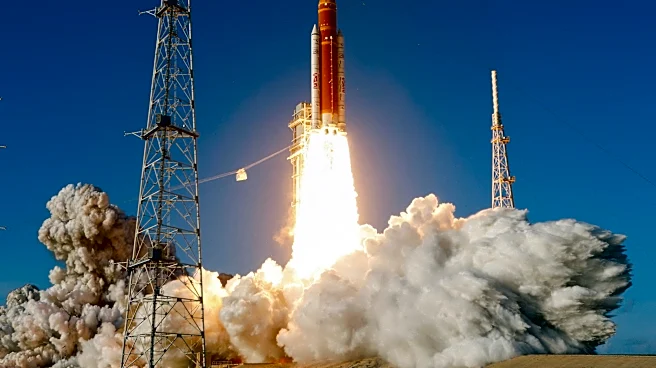
NASA Administrator Jared Isaacman is prioritizing annual launches of the Space Launch System (SLS) megarocket for the Artemis program, aiming for at least one launch per year. This strategy is driven by the ongoing 'new space race' with China. Following
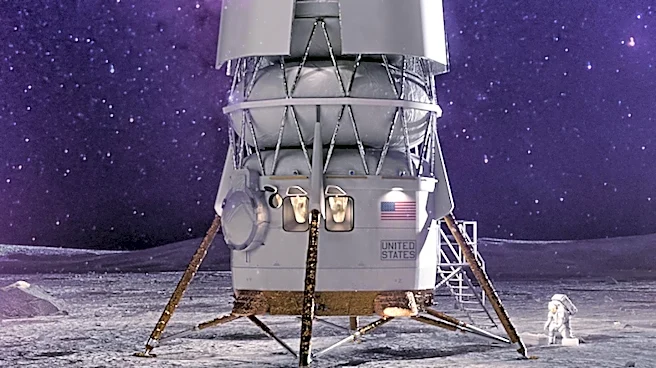
the successful Artemis II mission in April 2026, Isaacman expressed confidence in the U.S. space program's trajectory toward lunar landings and establishing a permanent moon base. The upcoming Artemis III mission, scheduled for 2027, will be a crewed flight to low Earth orbit to test docking procedures between the Orion capsule and private lunar landers from SpaceX and Blue Origin. Isaacman stressed the importance of consistently exercising NASA's deep-space human spaceflight capabilities to prepare for future missions like Artemis IV, which targets a crewed lunar landing in 2028.
Why It's Important?
The emphasis on consistent SLS launches and the accelerated pace of the Artemis program are critical for the U.S. to maintain its leadership in space exploration, particularly in light of China's ambitious lunar goals. Isaacman highlighted that China aims to land on the moon by the end of 2029, making the competition a 'real space race' with significant geopolitical implications. The success of the Artemis program and the establishment of a U.S. presence on the moon could influence global perceptions of technological and scientific prowess. Failure to meet these objectives or falling behind China could raise questions about U.S. technological superiority and security guarantees, potentially impacting various sectors from artificial intelligence to manufacturing and international trust.
What's Next?
NASA plans to launch Artemis III in 2027, a crewed mission designed to test crucial docking procedures for lunar landers. This mission is a vital step toward the Artemis IV mission, which is targeted for a crewed lunar landing in 2028. Administrator Isaacman intends to advocate for a minimum of one SLS launch per year to Congress, underscoring the necessity of sustained deep-space missions. The agency will continue to leverage its internal talent and industry partnerships to overcome challenges, drawing parallels to the spirit and energy of the Apollo era. The outcome of this accelerated lunar exploration effort will be closely watched by international observers and will likely shape future U.S. space policy and international collaborations.
Beyond the Headlines
The renewed 'space race' with China extends beyond mere scientific achievement; it carries profound implications for national security, economic competitiveness, and global influence. Isaacman's concerns about the 'consequence of getting this wrong' suggest that the competition for lunar dominance is intertwined with broader geopolitical rivalries. The ability of the U.S. to establish a sustained presence on the moon could solidify its position as a technological leader, influencing decisions on which nation's technology and security guarantees to trust. This competition could also spur innovation in various sectors, from advanced manufacturing to artificial intelligence, as both nations strive for technological advantages in space and on Earth. The ethical considerations of resource utilization on the moon and the potential for militarization of space are also underlying implications of this intensified race.