








What's Happening?
Justice Ketanji Brown Jackson, a member of the U.S. Supreme Court, has publicly criticized the court's recent decisions, which she believes risk the court being perceived as political. Speaking at a conference hosted by the American Law Institute, Jackson emphasized
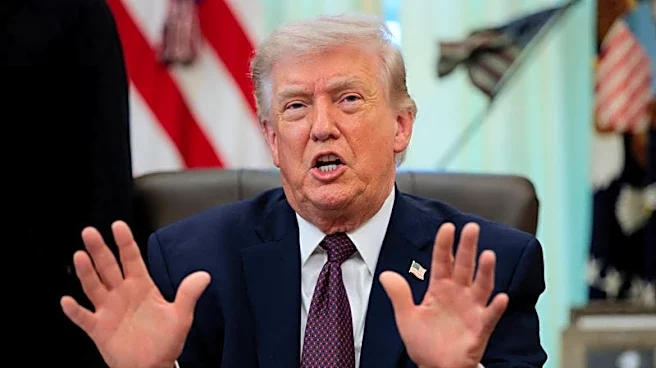
the importance of the court maintaining an apolitical stance. Her comments follow a series of controversial rulings by the court's conservative majority, including a decision that weakened the Voting Rights Act. Jackson, who was nominated by President Joe Biden in 2022, is one of the court's three liberal justices. She expressed concern over the court's emergency orders that have allowed policies from President Trump's administration to take effect temporarily. Jackson's remarks highlight her belief that the court should adhere strictly to principles and rules to avoid appearing partisan.
Why It's Important?
Justice Jackson's critique underscores a significant concern about the Supreme Court's role and its impact on public trust. The perception of the court as a political entity could undermine its authority and the public's confidence in its decisions. This is particularly crucial as the court's rulings have far-reaching implications on U.S. law and society, affecting issues like voting rights and presidential powers. Jackson's comments reflect a broader debate about the balance between judicial independence and political influence, a topic that resonates with ongoing discussions about the judiciary's role in a polarized political environment.
What's Next?
The Supreme Court's decisions and the public's perception of its impartiality will likely continue to be scrutinized. Justice Jackson's remarks may prompt further discussions among legal scholars, policymakers, and the public about the need for reforms to ensure the court's independence. The court's future rulings, especially on contentious issues, will be closely watched to see if they align with Jackson's call for apolitical decision-making. Additionally, responses from other justices, particularly those in the conservative majority, may shape the ongoing narrative about the court's role in American democracy.