






What's Happening?
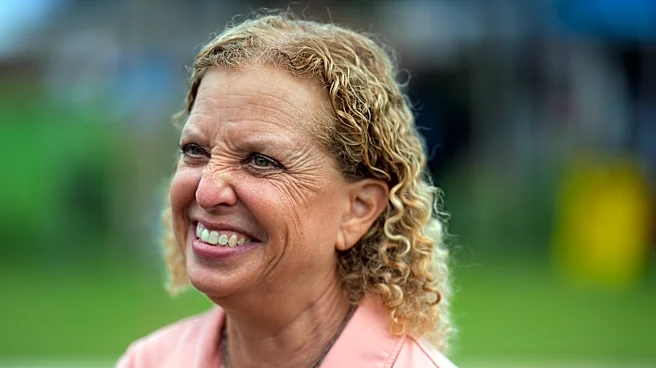
Rep. Debbie Wasserman Schultz has been projected to win the Democratic primary in Florida's 20th Congressional District, securing her path to a likely return to the House of Representatives. This victory occurred in a historically Black district with
a plurality Black population, where Wasserman Schultz, who is white, faced four Black Democratic opponents. Her decision to run in this district, after redistricting effectively eliminated her previous seat, drew significant criticism from Democratic officials, including House Minority Leader Hakeem Jeffries and Congressional Black Caucus Chair Yvette Clark. Despite the backlash, Wasserman Schultz benefited from a crowded primary field, which ultimately divided the vote among her challengers, including former Rep. Sheila Cherfilus-McCormick, former Broward County Mayor Dale Holness, activist Elijah Manley, and rapper Luther Campbell.
Why It's Important?
This primary election underscores the profound impact of redistricting on political representation and the ongoing tensions within the Democratic Party regarding diversity and electoral strategy. Governor Ron DeSantis's redrawing of Florida's congressional maps, aimed at bolstering Republican chances, inadvertently forced Wasserman Schultz into a district with a distinct demographic and political history. The controversy surrounding her candidacy in a historically Black district highlights the sensitive issue of minority representation, especially in the context of concerns that the Supreme Court's weakening of the Voting Rights Act could lead to a reduction in Black political power. Wasserman Schultz's win, despite being the only white candidate in the race and facing strong opposition from within her own party, demonstrates the enduring influence of incumbency and the strategic advantage gained from a fragmented opposition.
What's Next?
With her primary victory confirmed, Rep. Debbie Wasserman Schultz will now advance to the general election to face Republican nominee Brent Andersen. Given the strong Democratic lean of Florida's 20th Congressional District, Wasserman Schultz is widely expected to win the general election and secure her 12th term in Congress. The outcome of this primary, however, is likely to continue fueling discussions within the Democratic Party about how to best navigate redistricting challenges while upholding commitments to diverse representation. Future elections in similar redrawn districts may see increased scrutiny and potentially more unified efforts to support candidates who reflect the demographic makeup of their constituencies. The broader political landscape will also continue to grapple with the implications of state-level redistricting on national electoral outcomes.
Beyond the Headlines
The election in Florida's 20th Congressional District brings to the forefront the complex and often contentious debate over the role of race in political representation. While Wasserman Schultz's supporters might argue that her long experience and ability to deliver for constituents are paramount, critics contend that her candidacy in a historically Black district undermines efforts to increase descriptive representation for minority groups. This situation raises fundamental questions about the balance between electability, experience, and the imperative of ensuring that legislative bodies reflect the diversity of the populations they serve. The internal party strife and the public criticism from prominent Black Democrats suggest a deeper ideological divide on how to best achieve equitable representation in a post-redistricting landscape. This case could serve as a precedent or a cautionary tale for other politicians facing similar dilemmas in newly drawn districts across the country.