







What's Happening?
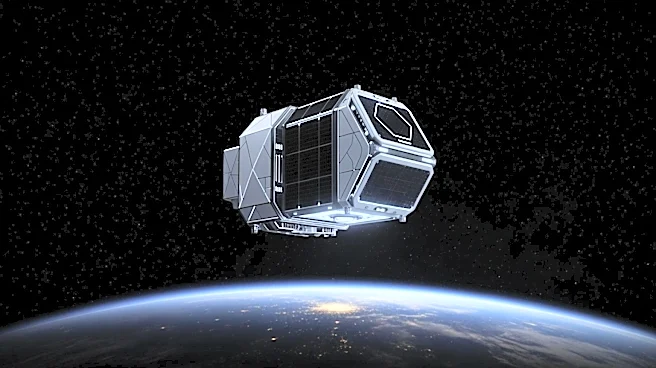
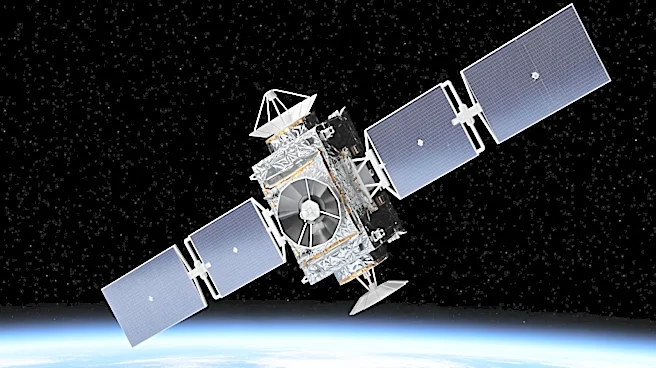
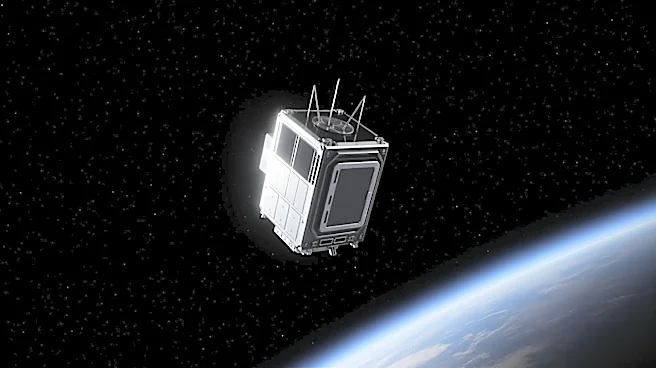
Northrop Grumman's Stargazer aircraft, a modified L-1011, took off from NASA's Wallops Flight Facility in Virginia on June 18, 2026, carrying a Pegasus XL rocket. This rocket is equipped with LINK, a robotic servicing spacecraft developed by Katalyst
Space. The mission aims to boost the orbit of NASA's Neil Gehrels Swift Observatory, which has been experiencing a decrease in altitude due to atmospheric drag exacerbated by recent solar activity. The Stargazer will transport the Pegasus XL to Kwajalein Atoll in the South Pacific, where it will be launched at an altitude of 40,000 feet. The rocket will then deploy LINK into orbit to rendezvous with and elevate the Swift Observatory.
Why It's Important?
This mission is crucial for maintaining the operational capabilities of the Swift Observatory, which plays a significant role in observing gamma-ray bursts and other cosmic phenomena. By boosting its orbit, NASA ensures the observatory can continue its scientific missions without the risk of re-entry due to orbital decay. The use of air-launched rockets like the Pegasus XL offers a flexible and efficient method for deploying payloads into space, potentially reducing costs and increasing the frequency of such missions. This approach also highlights the collaboration between NASA and private aerospace companies like Northrop Grumman and Katalyst Space, showcasing the growing role of commercial entities in space exploration.
What's Next?
Following the successful deployment of LINK, the spacecraft will dock with the Swift Observatory to perform the orbital boost. This mission could set a precedent for future satellite servicing missions, potentially extending the lifespan of other satellites facing similar orbital decay issues. The success of this mission may encourage further collaborations between NASA and private companies, fostering innovation in satellite maintenance and space exploration technologies.