


What's Happening?
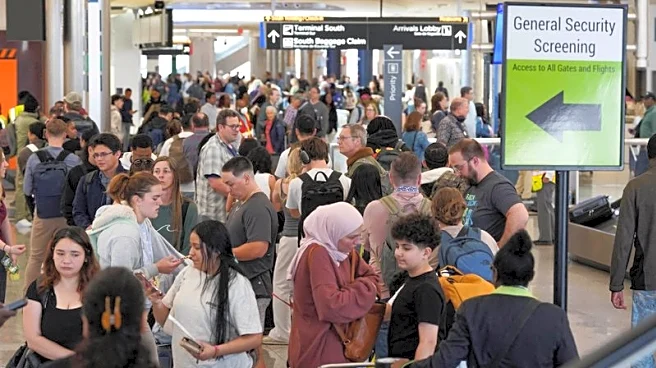
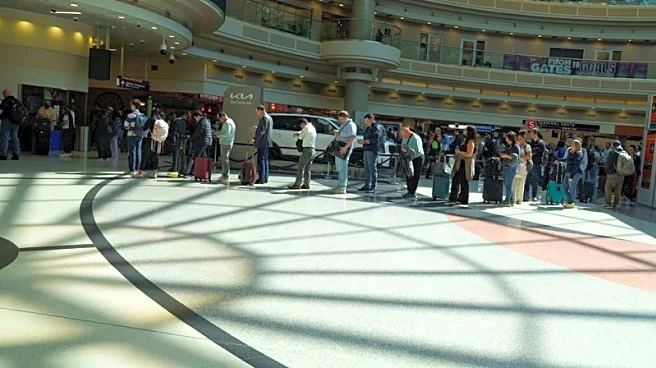
White House border advisor Tom Homan announced that ICE agents will be deployed to U.S. airports starting Monday to assist TSA amid a partial government shutdown. This decision follows President Trump's social media post urging action to alleviate long
TSA lines caused by increased call-out rates and staffing shortages. The Department of Homeland Security reported that 376 TSA agents have quit since the shutdown began on February 14. ICE agents will support TSA staff, although they will not operate X-ray machines due to lack of training. The move has sparked criticism from political figures, including Rep. Bennie G. Thompson and House Democratic Leader Hakeem Jeffries, who expressed concerns over the potential misuse of ICE agents at airports.
Why It's Important?
The deployment of ICE agents to airports is significant as it highlights the impact of the ongoing government shutdown on national security and travel efficiency. The decision underscores the administration's approach to handling staffing shortages and long wait times at airports, which could affect millions of travelers. Critics argue that the presence of ICE agents at airports may lead to increased tensions and concerns over civil liberties. The move also reflects broader political dynamics, with President Trump using the situation to pressure Democrats into negotiations. The outcome of this deployment could influence public perception of ICE and its role in domestic security.
What's Next?
As ICE agents begin their deployment, airports across the country may experience changes in security operations. The effectiveness of this measure in reducing wait times and improving airport efficiency will be closely monitored. Political leaders and civil rights groups may continue to voice opposition, potentially leading to legal challenges or policy revisions. The situation could also impact ongoing negotiations related to the government shutdown, as both parties seek to resolve the impasse. The administration's handling of this issue may influence future decisions regarding the use of federal agencies in domestic security roles.