






What's Happening?
The Centers for Disease Control and Prevention (CDC) has issued a warning regarding the Ebola outbreak in Central Africa, which has been declared an international health emergency by the World Health Organization (WHO) in May 2026. The CDC's analysis
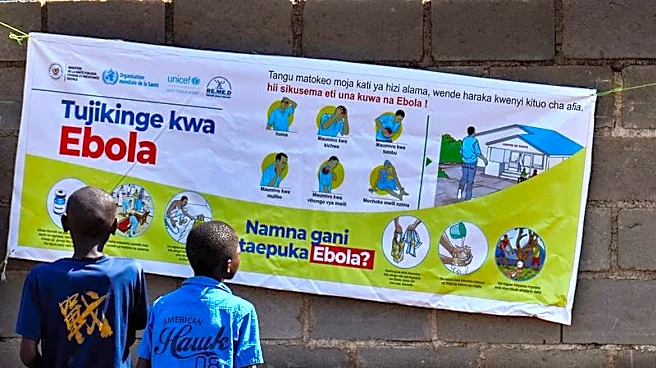
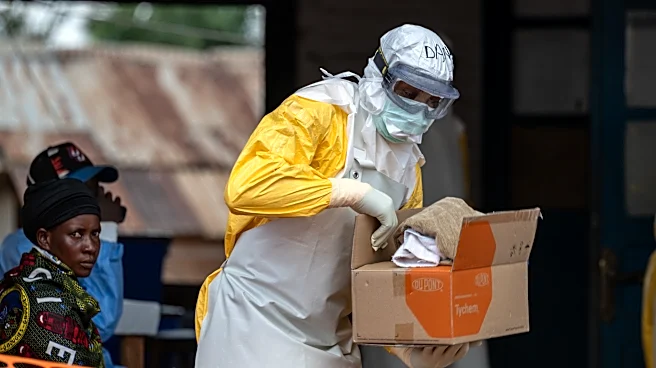
suggests that the outbreak could result in up to 20,000 cases and 4,000 deaths within the next three months if not adequately contained. The Democratic Republic of Congo and Uganda are currently at the forefront of efforts to control the spread of the virus. The CDC emphasizes the need for large-scale public health interventions similar to those used during the 2014 West Africa outbreak to prevent a worst-case scenario. The outbreak is occurring in regions with armed conflict and limited healthcare access, complicating containment efforts.
Why It's Important?
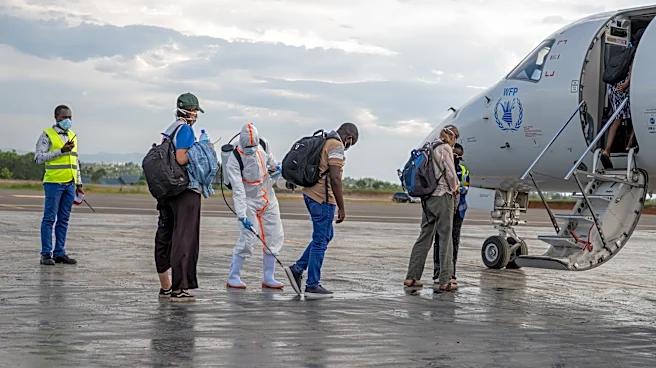
The potential severity of the Ebola outbreak poses significant challenges for global health security. If the outbreak spreads to urban international hubs, it could increase the risk to other countries, including the United States. Although the CDC states that the domestic risk remains low, the situation underscores the importance of international cooperation in managing infectious disease threats. The outbreak's trajectory could impact global travel and trade, and strain healthcare systems in affected regions. The U.S. has historically played a key role in responding to Ebola outbreaks, but current challenges, including funding cuts to the CDC, may hinder its ability to lead an effective international response.
What's Next?
Efforts to contain the outbreak will focus on increasing the isolation of cases and enhancing contact tracing. The CDC suggests that if 70% of cases are isolated within two days of symptom onset, the outbreak could be limited to fewer than 10,000 cases. International health organizations and governments are expected to ramp up their response efforts. The situation will require ongoing monitoring, and adjustments to travel advisories may be necessary if the outbreak spreads further. The U.S. and other nations may need to reassess their public health strategies and resource allocations to effectively support containment efforts.
Beyond the Headlines
The outbreak highlights the ongoing vulnerability of regions with limited healthcare infrastructure to infectious diseases. It also raises ethical questions about the global distribution of resources and the responsibility of wealthier nations to support outbreak containment in less developed areas. The situation may prompt discussions on improving global health governance and preparedness for future pandemics. Additionally, the outbreak could influence public perception of international travel and the importance of global health initiatives.