



What's Happening?
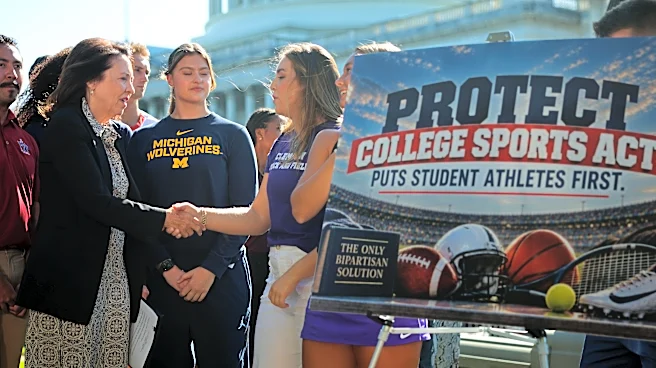
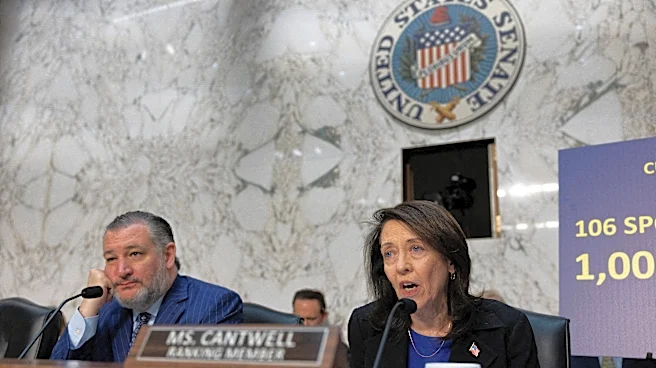
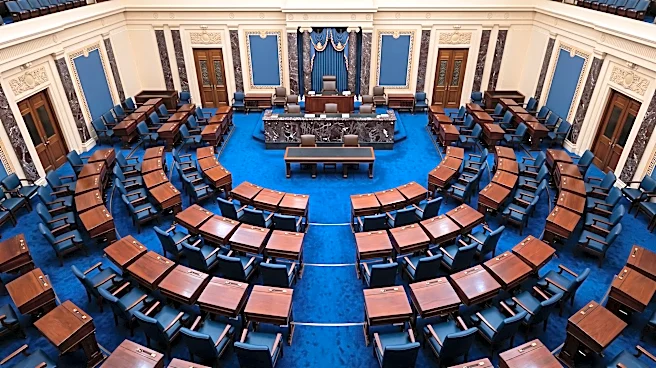
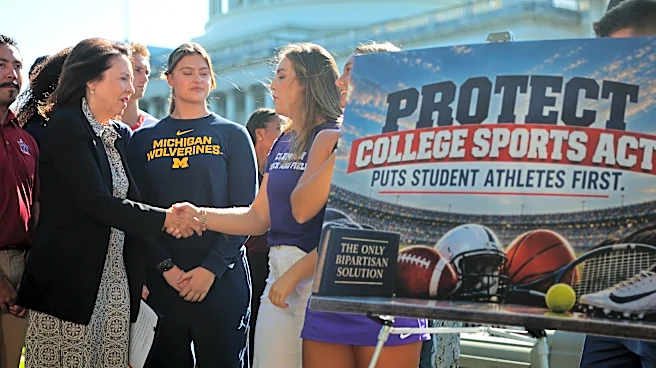
The Metro Conference has released a statement expressing gratitude for the U.S. Senate's passage of the Protect College Sports Act (PCSA). The conference views this legislation as a crucial step towards establishing stability and consistent national standards
within college athletics. According to the Metro Conference, the PCSA is essential for mid-major conferences, which are dedicated to offering diverse sports opportunities for student-athletes, to maintain broad-based Division I athletics. The conference acknowledges that further work is needed and has committed to collaborating with the House of Representatives on legislation that will safeguard the educational experience and competitive balance inherent in college sports. The Metro Conference has positioned itself as a leader in discussions with lawmakers regarding this legislation and the broader issues influencing intercollegiate athletics.
Why It's Important?
The passage of the Protect College Sports Act by the U.S. Senate, and the subsequent statement from the Metro Conference, highlights a significant development in the landscape of college athletics. This legislation aims to bring much-needed stability and uniform national standards to a system that has faced increasing challenges, particularly concerning student-athlete welfare and financial models. For mid-major conferences like the Metro, which often operate with more limited resources compared to Power Five conferences, the PCSA is critical for their continued ability to offer a wide array of sports programs. Without such protections and consistent standards, these conferences could struggle to compete and provide opportunities for student-athletes, potentially leading to a further consolidation of power and resources within a few dominant athletic programs. The Metro Conference's active engagement in these legislative discussions underscores the importance of this issue for the future viability and equity of college sports across the nation.
What's Next?
Following the U.S. Senate's passage of the Protect College Sports Act, the next critical step involves collaboration with the House of Representatives. The Metro Conference has explicitly stated its commitment to working with the House on further legislation to protect the educational experience and competitive balance in college sports. This indicates that the legislative process is ongoing and that the current bill may be a foundational piece rather than a final solution. Stakeholders, including other athletic conferences, universities, and student-athlete advocacy groups, will likely continue to engage with lawmakers to shape the final form of any legislation. The focus will be on ensuring that the eventual laws provide comprehensive and equitable solutions for all levels of college athletics, addressing concerns about athlete compensation, transfer rules, and the overall financial sustainability of programs. The Metro Conference's continued leadership in these discussions suggests a proactive approach to influencing future policy decisions.
Beyond the Headlines
The Protect College Sports Act and the Metro Conference's response touch upon deeper ethical and structural issues within college athletics. The push for national standards reflects a growing recognition that the current decentralized system, with varying state laws and conference rules, creates inconsistencies and potential inequities for student-athletes. This legislation could represent a shift towards a more unified regulatory framework, potentially altering the traditional amateur model of college sports. The emphasis on 'educational experience and competitive balance' suggests an attempt to reconcile the commercial aspects of college athletics with its academic mission. However, the long-term implications could include increased federal oversight in areas traditionally governed by the NCAA and individual institutions, potentially leading to debates over institutional autonomy and the definition of 'student-athlete.' The outcome of these legislative efforts will likely redefine the relationship between education, sport, and commerce in American higher education.