





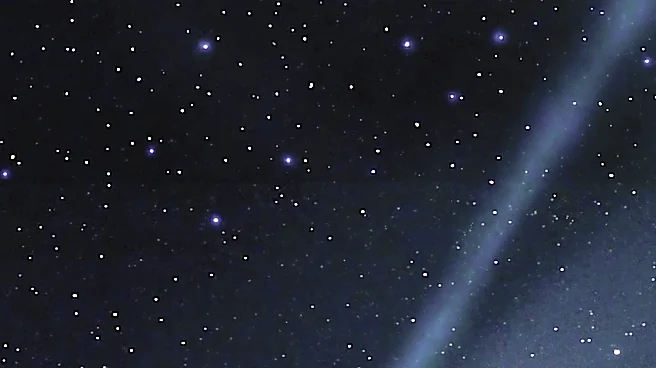



What's Happening?
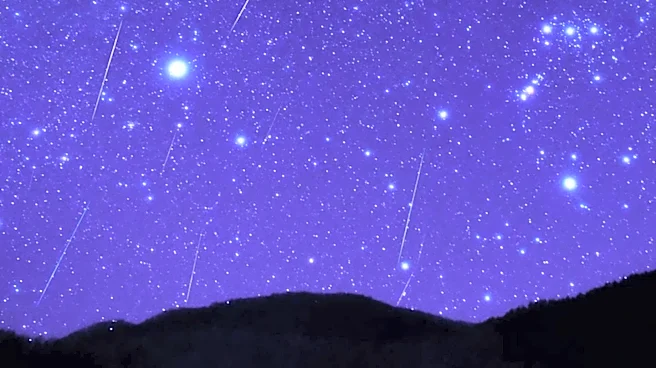
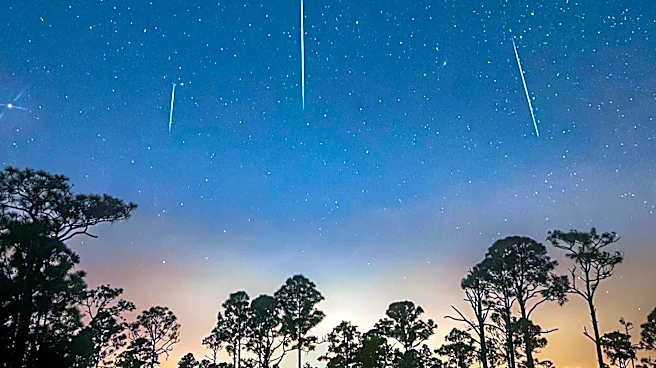
The Perseid meteor shower, one of the most anticipated astronomical events of the year, is set to peak on August 12-13, 2026. The shower, caused by debris from the Swift-Tuttle comet, will be visible from July 14 to September 1. This year, a new moon
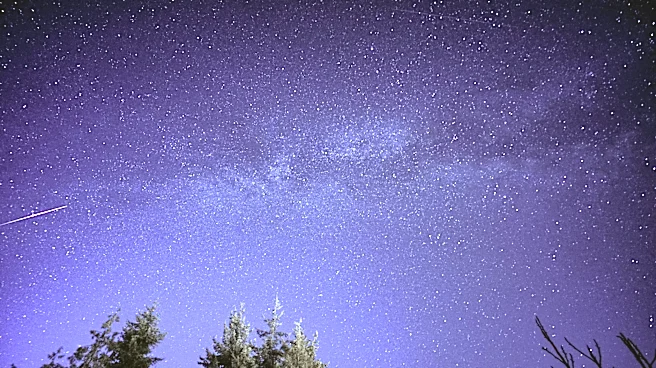
on August 12 will provide particularly dark skies, enhancing the visibility of the meteors. Observers can expect to see 50-100 meteors per hour during the peak, with the best viewing times being the pre-dawn hours. The Pisgah Astronomical Research Institute in North Carolina offers a certified Dark Sky Park for optimal viewing experiences.
Why It's Important?
The Perseid meteor shower is a significant event for both amateur stargazers and professional astronomers. It provides an opportunity to observe a high number of meteors in a short period, offering insights into the composition and behavior of cometary debris. The event also serves as an educational and engaging experience for the public, fostering interest in astronomy and science. The dark sky conditions this year are expected to enhance the viewing experience, making it a prime opportunity for observation.
What's Next?
As the peak of the Perseid meteor shower approaches, observers are advised to find locations with minimal light pollution for the best experience. The Pisgah Astronomical Research Institute will host viewing events, and enthusiasts are encouraged to plan visits to dark sky areas. Weather conditions will play a crucial role in visibility, so staying updated on local forecasts is recommended. The shower will continue to be visible until September 1, offering multiple opportunities for observation.