





What's Happening?
The World Bank has sanctioned a $500 million credit facility aimed at enhancing Nigeria's agricultural sector. This funding, provided through the International Development Association (IDA), is designated for the Nigeria Sustainable Agricultural Value-Chains
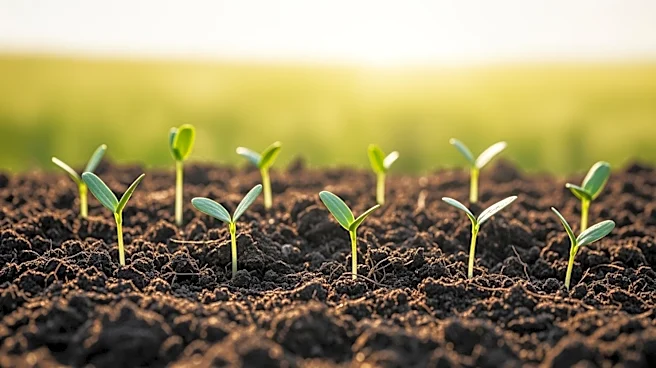
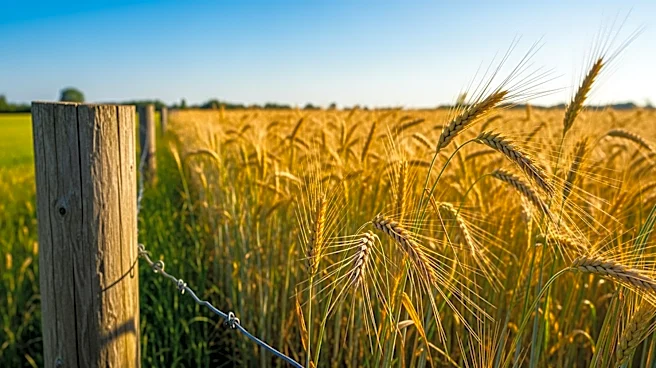
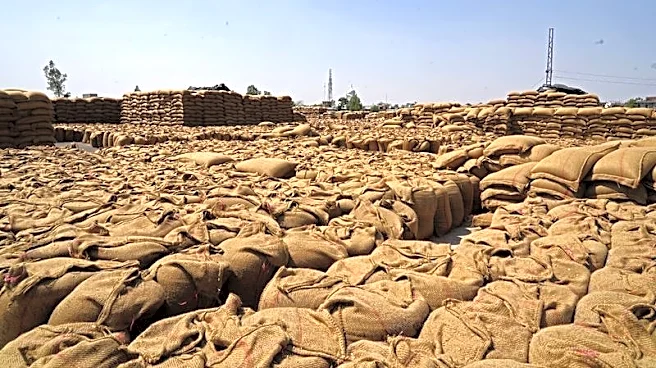
for Growth (AGROW) project, which will run from 2026 to 2032. The initiative seeks to address challenges such as rising food prices and low agricultural productivity by supporting approximately one million smallholder farmers. The project aims to increase agricultural productivity, strengthen value chains, improve national food security, and create jobs in farming and agribusiness. Key focus areas include major staple crops like rice, maize, cassava, and soybeans. The program will also provide matching grants to agribusinesses, invest in processing and storage, and improve access to quality seeds and fertilizers.
Why It's Important?
Agriculture is the largest employer in Nigeria, yet the sector faces significant challenges, including low yields, climate-related risks, poor infrastructure, and limited access to finance. The World Bank's $500 million intervention is crucial for transforming Nigeria's agriculture from subsistence-level activity into a more commercial and sustainable sector. By empowering farmers and strengthening value chains, the AGROW project is expected to improve food availability and drive economic growth. Additionally, the initiative is anticipated to attract about $220 million in private investment, further bolstering the agricultural sector's development and sustainability.
What's Next?
The AGROW project will introduce a national digital registry for farmers, facilitating better planning, input distribution, and advisory services. This digital approach is expected to enhance the efficiency and effectiveness of agricultural practices in Nigeria. As the project progresses, stakeholders will likely monitor its impact on food security and economic growth closely. The success of this initiative could serve as a model for similar agricultural development projects in other regions facing comparable challenges.