
What's Happening?
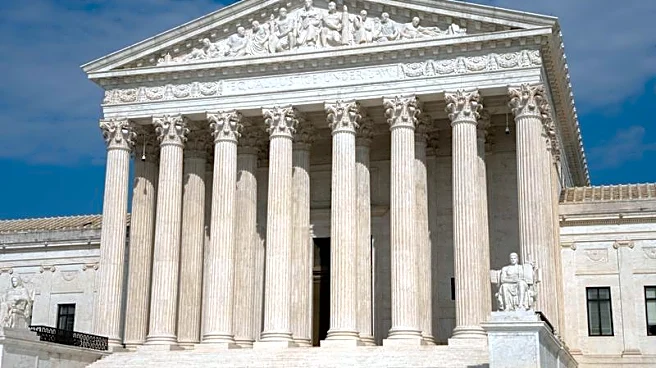
Following a Supreme Court reaffirmation of birthright citizenship in June, the Trump administration and its allies have initiated efforts to limit birthright citizenship in U.S. territories. Roger Severino
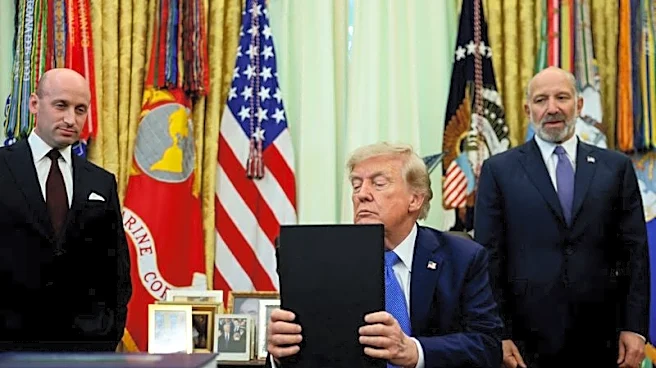
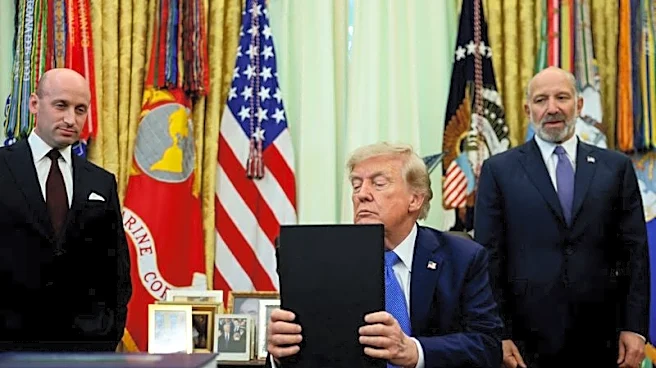
of the Heritage Foundation suggested President Trump amend an Executive Order to apply to U.S. Territories, arguing they are not automatically bound by the 14th Amendment. Fox News host Laura Ingraham discussed this with Vice President JD Vance, who supported the idea. Subsequently, a member of the Congressional Freedom Caucus introduced the End Birthright Citizenship for Territories Act, which aims to deny citizenship to individuals born in U.S. territories from January 1, 2027, onward. President Trump then issued an Executive Order in August purporting to limit birthright citizenship in territories where citizenship is not conferred by federal statute. A report by Americans Advancing Freedom and the Edwin Meese III Institute further supported Congress's ability to limit U.S. citizenship for those born in the territories. These actions are rooted in the 125-year-old Insular Cases, which addressed the application of the Constitution in newly acquired U.S. territories like Puerto Rico and Guam.
Why It's Important?
These efforts to redefine birthright citizenship in U.S. territories carry significant implications for the 3.6 million people residing there, who currently face an unclear constitutional status. The federal government already labels individuals born in Puerto Rico, Guam, the U.S. Virgin Islands, and the Northern Mariana Islands as 'statutory' rather than 'Fourteenth Amendment' U.S. citizens, and denies citizenship to those born to non-citizen parents in American Samoa, classifying them as 'non-citizen' U.S. nationals. This creates a system where residents of U.S. territories lack full constitutional protections and rights, despite owing allegiance to the United States. The Supreme Court has expressed increasing skepticism about the Insular Cases, with several justices, including Ketanji Brown Jackson, Neil Gorsuch, and Sonia Sotomayor, criticizing them as racially motivated and calling for their overruling. However, the Court has repeatedly avoided definitively resolving the question of citizenship in these territories, leaving the door open for political branches to interpret and act on the issue. This situation highlights a fundamental disparity in democratic rights and protections for U.S. territory residents compared to those in states.
What's Next?
The proposed End Birthright Citizenship for Territories Act, if passed, could significantly alter the citizenship status of individuals born in U.S. territories from 2027. The Executive Order issued by President Trump in August is likely to face legal challenges, as its authority to unilaterally limit birthright citizenship is debatable, especially given the Supreme Court's recent reaffirmation of birthright citizenship. The ongoing debate surrounding the Insular Cases within the Supreme Court suggests that future cases may force a more definitive ruling on their legal force and applicability. Stakeholders, including residents of U.S. territories, civil rights organizations, and legal scholars, are expected to continue advocating for full constitutional rights and protections for those in the territories. The political branches, including Congress and future administrations, will likely continue to grapple with the interpretation and application of citizenship laws in these areas, potentially leading to further legislative or executive actions.
Beyond the Headlines
The debate over birthright citizenship in U.S. territories extends beyond legal technicalities, touching upon deeper issues of American colonialism and democratic accountability. The Insular Cases, which form the legal basis for these actions, are widely criticized for their racist origins and for creating a framework where the Constitution does not fully apply in certain U.S. territories. This has led to what some, including Justice Gorsuch, term 'American colonialism,' where residents of these territories lack voting representation in Congress and cannot vote for president, yet are subject to federal policies and 'social and economic experiments' without their consent. This lack of democratic participation and full constitutional rights contributes to significant disparities, including higher poverty rates, population loss, and health inequalities compared to U.S. states. The continued reliance on the Insular Cases, despite judicial criticism, raises concerns about the potential for authoritarian overreach and the erosion of constitutional principles, as it allows for the selective application of constitutional rights based on geography.