








What's Happening?
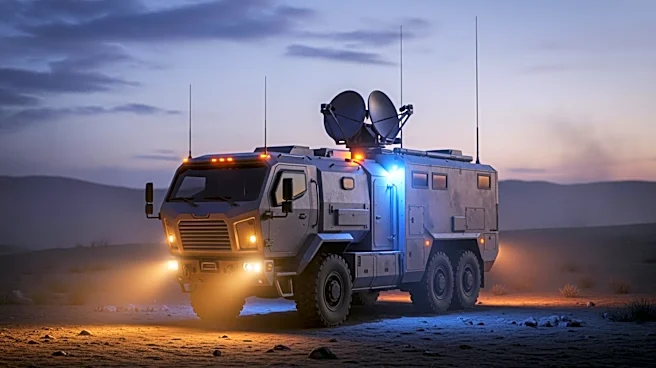
The US Army is advancing its strategies for future warfare by developing mobile command centers that can operate amidst digital noise. This initiative, part of the Next Generation Command and Control (NGC2) system, aims to make command posts less detectable
and more resilient against enemy targeting. Recent exercises at Fort Carson, Colorado, tested these capabilities, involving electronic warfare, cyber systems, and space-based effects. The command centers, housed in vehicles, are designed to be mobile and dispersed, reducing their visibility and vulnerability. This approach allows for rapid relocation and continued operation even under electronic interference. The exercises highlighted the importance of adapting to enemy monitoring capabilities and maintaining communication through backup systems.
Why It's Important?
The development of mobile command centers represents a significant shift in military strategy, addressing vulnerabilities exposed by recent conflicts, such as the war in Ukraine. By reducing the size and static nature of command posts, the US Army aims to enhance their survivability and effectiveness in modern warfare environments. This approach not only improves operational flexibility but also mitigates the risk of high-value targets being easily located and destroyed. The emphasis on electronic warfare and digital resilience reflects the evolving nature of military engagements, where information dominance and cyber capabilities are increasingly critical. This innovation could set a precedent for future military strategies, influencing how armed forces worldwide approach command and control in conflict scenarios.
What's Next?
The US Army will likely continue refining the NGC2 system, incorporating lessons learned from recent exercises to enhance its effectiveness. Future developments may focus on further reducing the detectability of command centers and improving their ability to operate in contested environments. As the system evolves, collaboration with defense contractors and technology firms will be crucial to integrating advanced capabilities. The Army may also explore additional training exercises to test the system under various scenarios, ensuring readiness for potential conflicts. The success of these initiatives could influence broader military doctrines, emphasizing mobility, digital resilience, and adaptability in future warfare.