
What's Happening?
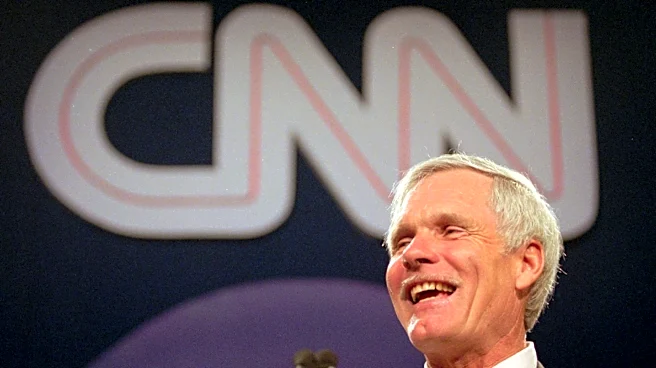
Ted Turner, the influential media mogul and philanthropist, has passed away at the age of 87. Turner, known for founding CNN and his significant contributions to philanthropy, died at his home in Lamont,
Florida, after battling Lewy body dementia. In 1997, Turner made headlines with his unprecedented $1 billion pledge to the United Nations Foundation, a move that catalyzed the era of billion-dollar donations. His contributions extended beyond this, as he co-founded the Nuclear Threat Initiative and established several environmental and conservation organizations. Turner's philanthropic efforts were driven by a deep concern for global issues, including environmental conservation and nuclear threat reduction.
Why It's Important?
Turner's philanthropic legacy has had a profound impact on the landscape of charitable giving. His billion-dollar donation to the United Nations Foundation set a new standard for philanthropy, encouraging other wealthy individuals to make substantial contributions. This shift has led to significant funding for global humanitarian, environmental, and economic programs. Turner's focus on environmental conservation has also contributed to increased awareness and funding for initiatives aimed at protecting biodiversity and promoting sustainable practices. His efforts have inspired a new generation of philanthropists to prioritize global issues and leverage their wealth for positive change.
What's Next?
Turner's passing may prompt reflections on the future of large-scale philanthropy and the role of wealthy individuals in addressing global challenges. His children and grandchildren, who are involved in the Turner Foundation, are likely to continue his legacy of charitable giving. The impact of Turner's contributions will likely be felt for years to come, as organizations he supported continue to address pressing global issues. Additionally, his influence may encourage other philanthropists to consider the long-term impact of their donations and the importance of addressing environmental and humanitarian concerns.