






What's Happening?
A new report by the International Crisis Group (ICG) reveals that organized crime has become a significant impediment to protecting the Amazon rainforest. Criminal networks are now active in over two-thirds of Amazon municipalities across Bolivia, Brazil,
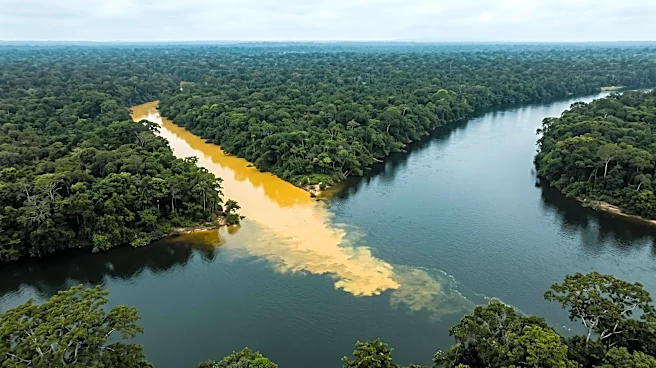
Colombia, Ecuador, Peru, and Venezuela. These groups exploit weak state presence to expand drug trafficking and illegal gold mining operations. Brazilian syndicates like Comando Vermelho and Primeiro Comando da Capital are driving much of this expansion, establishing cross-border supply chains into Peru, Colombia, Venezuela, and Guyana. Colombian groups such as the ELN and Comandos de la Frontera, along with Ecuadorian outfits Los Lobos and Los Choneros, are competing and colluding over coca, cocaine routes, and gold mines. The ICG report notes that these activities not only cause brutal violence but also directly damage the environment through chemical contamination and forest-clearing roads. Indirectly, criminal profits are funneled into cattle ranching and land grabbing, further exacerbating deforestation. The report also highlights that these criminal groups undermine state efforts to halt environmental damage through coercion and corruption, effectively eroding governance systems designed to protect the ecosystem.
Why It's Important?
The proliferation of organized crime in the Amazon poses a critical threat to global environmental stability and regional security. The Amazon, a vital carbon sink and biodiversity hotspot, is nearing a tipping point where large-scale ecological collapse could become irreversible, with roughly a fifth of its original forest already deforested. The expansion of criminal activities, including drug trafficking and illegal gold mining, not only devastates the environment but also fuels violence and corruption, destabilizing national governments and indigenous communities. The report underscores the difficulty in cooperation between indigenous communities and national governments due to distrust and vast distances, even as criminal groups operate seamlessly across borders. This situation has significant implications for international efforts to combat climate change and protect indigenous rights. The involvement of powerful illegal outfits in the Amazon's destruction also raises concerns about the integrity of global supply chains, as international companies and commodity buyers may unknowingly profit from the region's destruction, necessitating greater scrutiny and accountability.
What's Next?
The International Crisis Group report suggests several crucial next steps to counter the growing threat of organized crime in the Amazon. It urges Amazon governments to deepen cross-border cooperation, harmonize environmental laws, and intensify efforts to crack down on corruption and illicit finance. The report points to successful collaborations between security forces and Indigenous guards, such as in Brazil’s Yanomami territory, where deforestation and criminal activity have sharply decreased, as a promising model for future action. This model emphasizes the need for enhanced resources and coordination for Indigenous guards, who are often the first responders to criminal intrusion. Furthermore, the ICG stresses the importance of international companies and commodity buyers ensuring their supply chains are not inadvertently profiting from the destruction of the Amazon. This implies a need for greater due diligence and transparency in global trade. Without these concerted efforts, the region risks irreversible ecological collapse, and the influence of organized crime could further entrench itself, making future interventions more challenging.
Beyond the Headlines
The ICG report on organized crime in the Amazon reveals deeper implications beyond immediate environmental and security concerns. The hollowing out of governance systems through coercion and corruption by criminal groups represents a significant challenge to state sovereignty and the rule of law in the affected regions. This erosion of state authority can lead to a power vacuum, allowing criminal organizations to further consolidate their control and diversify their illicit activities. The report also touches upon the ethical dimension of global consumption, highlighting how international demand for commodities, particularly those linked to illegal mining and land grabbing, can inadvertently fuel the destruction of the Amazon. This necessitates a re-evaluation of consumer responsibility and corporate accountability in global supply chains. The struggle of indigenous communities, who are often on the front lines of defense against these criminal intrusions but lack adequate resources and state support, underscores a profound human rights crisis. Their traditional knowledge and stewardship are vital for forest protection, yet they face immense threats, raising questions about global solidarity and support for these vulnerable populations. The long-term shifts could include increased migration, social unrest, and a significant setback in global climate goals if the Amazon's ecological integrity is compromised beyond repair.