
What's Happening?
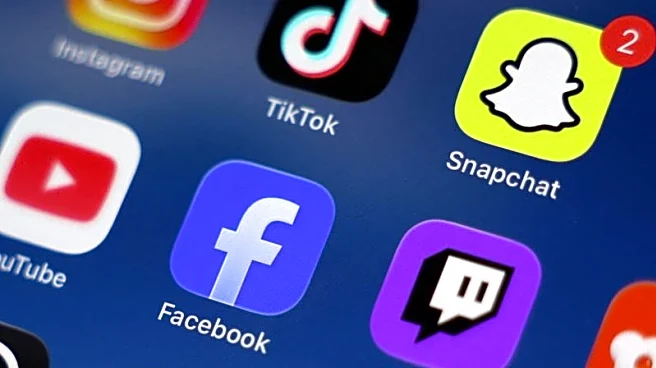
France's National Assembly has approved legislation to ban children under 15 from accessing social media platforms, citing concerns about online bullying and mental health risks. The bill, which passed
with a vote of 116 to 23, aims to implement age-verification mechanisms compliant with European Union law to block access for young teenagers. The legislation also extends an existing ban on smartphones in junior and middle schools to high schools. French President Emmanuel Macron supports the measure, drawing parallels to Australia's recent ban on social media for under-16s. The bill reflects growing public concern over the impact of social media on minors, with a Harris Interactive survey showing 73% public support for the ban.
Why It's Important?
The proposed ban highlights the increasing global focus on the impact of social media on young people's mental health and safety. By restricting access to social media for minors, France aims to address issues such as online bullying and the negative effects of social media on mental well-being. The legislation could set a precedent for other countries considering similar measures, influencing international policy on digital safety for children. The move also underscores the challenges of enforcing age restrictions on digital platforms, as seen in Australia's experience. The ban could lead to broader discussions about the role of social media in society and the responsibilities of tech companies in protecting young users.
What's Next?
The bill will now proceed to the French Senate for further consideration before a final vote in the lower house. If passed, the ban is expected to be implemented by the start of the next academic year in September. The French government will need to work with social media platforms to develop effective age-verification systems and ensure compliance with EU regulations. The legislation may face challenges in enforcement, as seen in other countries, and could prompt debates about privacy and the balance between safety and freedom of expression. The outcome of the bill could influence similar legislative efforts in other EU member states and beyond.