


What's Happening?
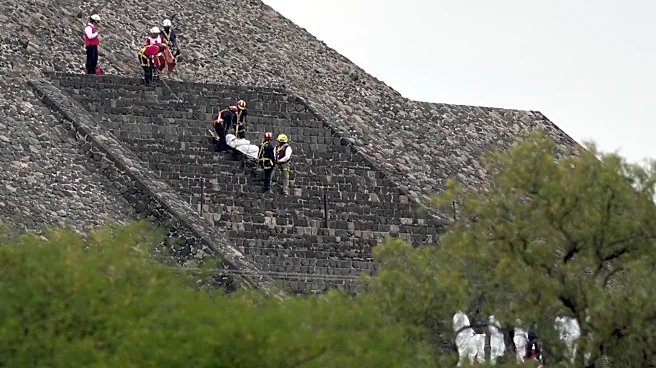
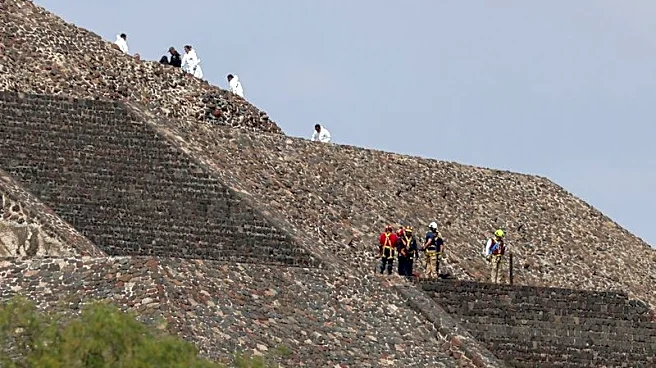
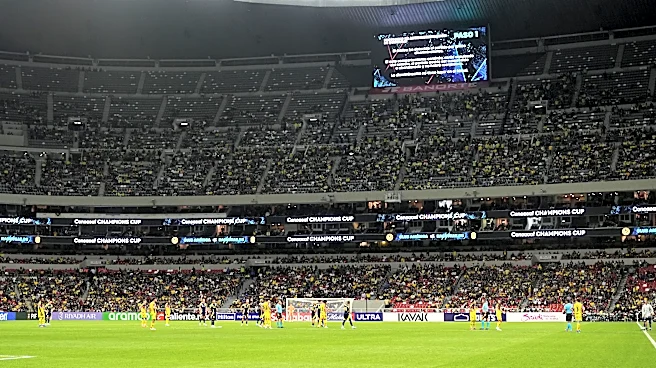
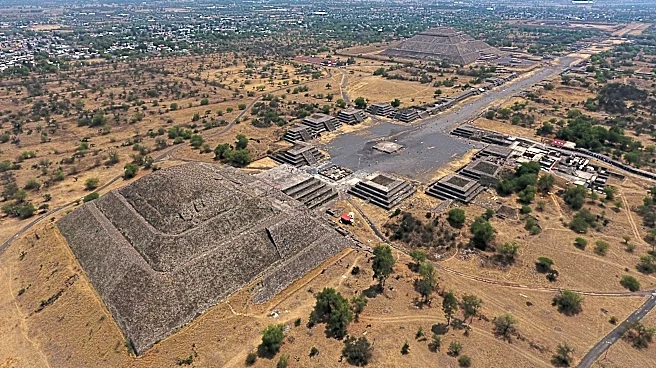
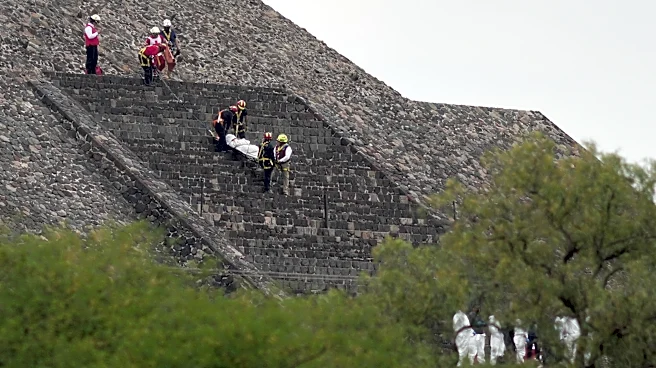
Mexico's government has announced enhanced security measures at tourist sites after a shooting incident at the Teotihuacan pyramids, a UNESCO Heritage Site near Mexico City. The attack, which occurred less than two months before the FIFA World Cup, resulted
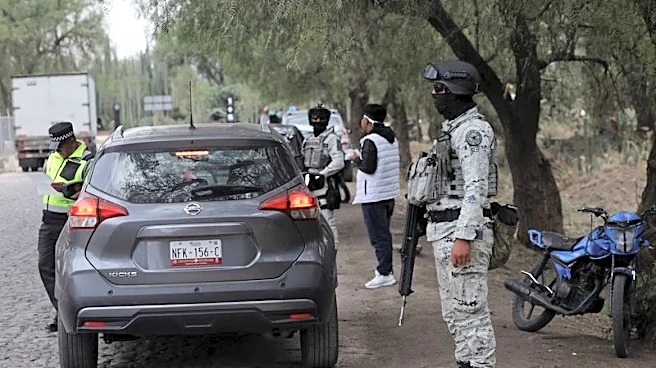
in the death of a Canadian tourist and injuries to several others. The shooter, who acted alone, was reportedly influenced by the 1999 Columbine massacre. In response, Mexican authorities are deploying 100,000 security forces, military vehicles, and drones across the country, focusing on World Cup host cities and major tourist destinations. The government aims to reassure visitors of their safety during the upcoming tournament.
Why It's Important?
The shooting at Teotihuacan raises significant concerns about security in Mexico, especially with the FIFA World Cup approaching. The incident challenges the Mexican government's efforts to portray the country as a safe destination for international visitors. The increased security measures are crucial to maintaining confidence among tourists and World Cup attendees. The situation highlights the broader issue of violence in Mexico, which, despite recent declines in homicide rates, remains a concern due to cartel activities. The government's response will be closely watched by international stakeholders, including FIFA and potential visitors.
What's Next?
As Mexico prepares for the World Cup, the government will continue to implement and possibly expand security measures to ensure the safety of tourists and participants. The effectiveness of these measures will be critical in shaping international perceptions of Mexico's ability to host large-scale events safely. Ongoing assessments and adjustments to security protocols are expected as the tournament approaches. The incident may also prompt discussions on long-term strategies to address violence and improve public safety in Mexico.