







What's Happening?
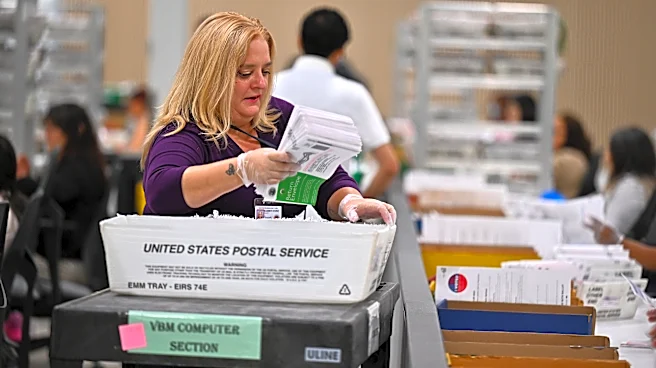
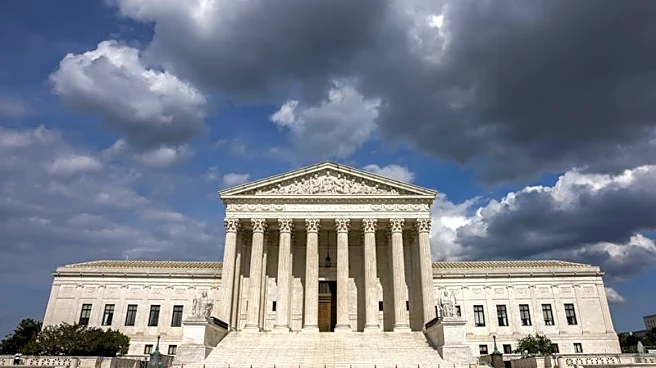
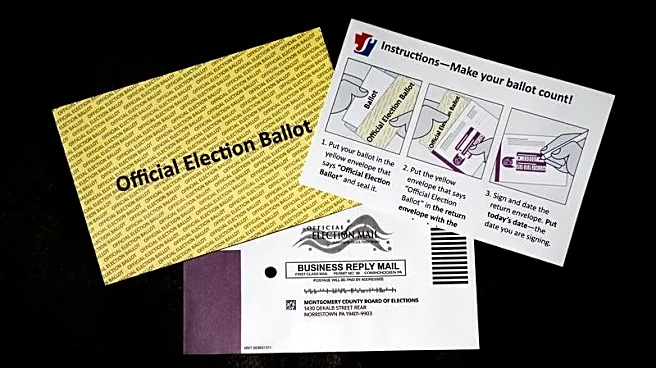
The US Supreme Court has upheld a Mississippi law allowing mail-in ballots postmarked by Election Day to be counted if received within five business days after the election. This decision, made in a 5-4 ruling, overturns a lower court's decision that
had found the law inconsistent with federal election timing statutes. The ruling is a setback for President Trump, who has been advocating for stricter mail-in voting regulations. Justice Amy Coney Barrett, joined by Chief Justice John Roberts and the court's three liberal justices, stated that federal law requires only that ballots be cast by Election Day, not received. The decision affects absentee voting, which is limited in Mississippi to certain groups, including seniors and the disabled. The ruling aligns with practices in about 30 states and the District of Columbia, which accept ballots postmarked by Election Day but received later.
Why It's Important?
This ruling has significant implications for the upcoming elections, particularly in terms of mail-in voting, which has been a contentious issue. The decision supports the continuation of mail-in voting practices that many argue are crucial for ensuring voter participation, especially among seniors, rural voters, and those with disabilities. It also represents a legal setback for President Trump and his allies, who have been pushing for more restrictive voting measures. The ruling may influence similar legal challenges in other states and could impact the political landscape by potentially increasing voter turnout in demographics that traditionally favor Democratic candidates.
What's Next?
Following the Supreme Court's decision, there may be increased legislative efforts by Republicans to introduce new voting restrictions at the state level. President Trump has called for the passage of the SAVE America Act, which would impose stricter voting requirements, including photo ID and proof of citizenship. However, such efforts face significant opposition in the Senate, where Democrats have vowed to protect voting rights. The ruling may also lead to further legal challenges in other states with similar mail-in voting laws, as stakeholders on both sides of the issue continue to navigate the evolving legal landscape.