


What's Happening?
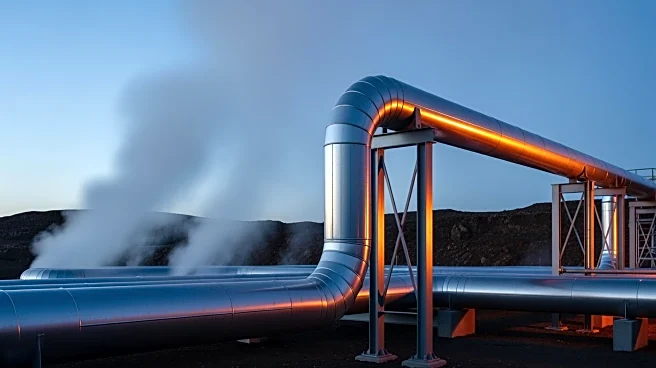
The United States is making significant strides in geothermal power generation with the construction of its first large-scale commercial enhanced geothermal system (EGS) power generator. This project, led by Fervo Energy, is set to come online in June
2026 in Utah. EGS technology differs from conventional geothermal systems by using advanced drilling techniques to create hydrothermal reservoirs in areas where they do not naturally exist. This innovation allows for the expansion of geothermal power generation beyond the limited locations of conventional systems, which are typically near tectonic plate boundaries or volcanic hotspots. The U.S. Geological Survey estimates that there is a potential for 135 gigawatts (GW) of electric-power generation from EGS in the Great Basin of the U.S. Southwest alone. The project in Utah is part of a broader effort to increase the United States' geothermal capacity, which currently stands at 2.7 GW, representing 0.2% of the country's summer generating capacity.
Why It's Important?
The development of enhanced geothermal systems is crucial for diversifying the United States' renewable energy portfolio. Unlike solar and wind power, geothermal energy provides a continuous, weather-independent power source, which can significantly enhance grid reliability and stability. The potential to generate up to 150 GW of cost-effective geothermal power in the coming decades could play a pivotal role in meeting the country's growing energy demands while reducing carbon emissions. This expansion could also stimulate economic growth by creating jobs in the renewable energy sector and reducing dependency on fossil fuels. Furthermore, partnerships with large electricity consumers, such as data centers, highlight the commercial viability and demand for geothermal energy.
What's Next?
The successful implementation of EGS technology could lead to further expansion projects across the United States. Fervo Energy plans additional EGS generators in Utah by 2027, with further expansion anticipated in 2028. The Department of Defense is also collaborating with geothermal developers to power military bases, indicating a growing interest in geothermal energy from various sectors. Continued research and development efforts are essential to overcoming challenges such as high capital costs and the risk of induced seismicity. As these hurdles are addressed, EGS could become a cornerstone of the U.S. renewable energy strategy.
Beyond the Headlines
The shift towards enhanced geothermal systems reflects a broader trend of innovation in renewable energy technologies. By leveraging advanced drilling techniques from the oil and gas industry, EGS represents a convergence of traditional and renewable energy sectors. This technological cross-pollination could lead to further breakthroughs in energy production and efficiency. Additionally, the environmental benefits of geothermal energy, such as reduced greenhouse gas emissions and minimal land use, align with global efforts to combat climate change and promote sustainable development.