

What's Happening?
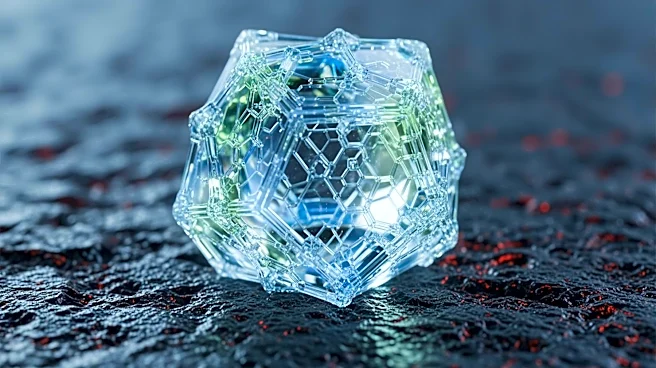
In a groundbreaking study, scientists have identified a new type of crystal, known as a clathrate, within the remnants of the 1945 Trinity nuclear test. This test, conducted by the U.S. Army, marked the first-ever demonstration of a nuclear weapon and
led to significant historical events, including the bombings of Hiroshima and Nagasaki. The discovery was made in trinitite, a glassy material formed from the intense heat and pressure of the nuclear explosion, which fused New Mexico desert sand and test site debris. The clathrate crystal, which traps atoms within its lattice, had never been observed in nature or in the aftermath of a nuclear explosion before. This finding was published in the Proceedings of the National Academy of Sciences and highlights the extreme conditions created by nuclear detonations.
Why It's Important?
The discovery of a new clathrate crystal in the aftermath of a nuclear explosion underscores the profound and often unpredictable effects of nuclear detonations. This finding not only expands scientific understanding of materials formed under extreme conditions but also serves as a stark reminder of the destructive power of nuclear weapons. The presence of such unique materials could have implications for future research in materials science and nuclear physics. Additionally, it highlights the ongoing legacy of nuclear testing and its impact on the environment, as well as the importance of regulating and understanding nuclear materials.
What's Next?
Further research is likely to explore the properties and potential applications of the newly discovered clathrate crystal. Scientists may investigate whether similar materials can be synthesized in laboratory settings or if they have practical uses in technology or industry. Additionally, this discovery may prompt a reevaluation of the environmental and health impacts of nuclear test sites, potentially influencing policy decisions regarding nuclear testing and cleanup efforts. The scientific community may also focus on understanding the formation processes of such materials to gain insights into the conditions present during nuclear explosions.