






What's Happening?
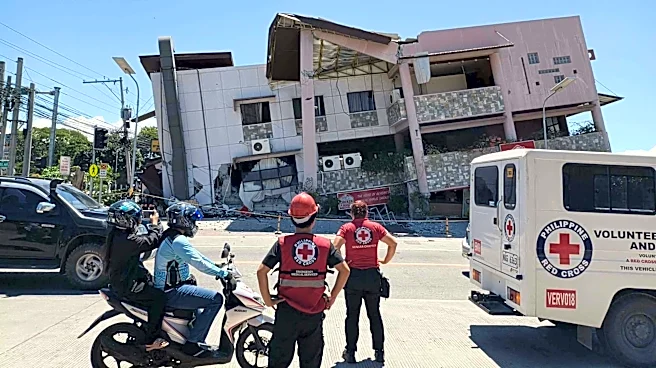
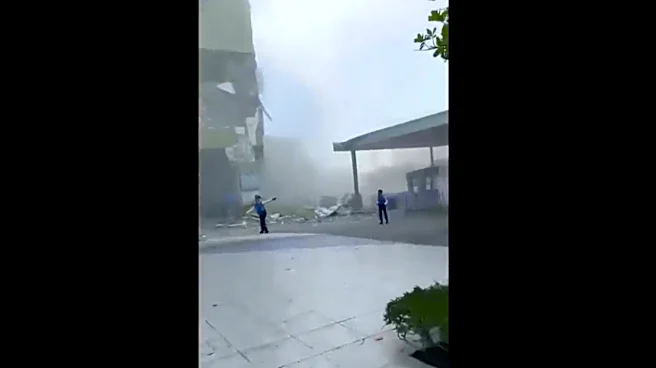
A powerful magnitude-7.8 earthquake struck the southern Philippines early on Monday, leading to the collapse of buildings and triggering tsunami warnings. The epicenter was located about 20 kilometers off the coast of Sarangani province, with tremors
felt across Mindanao and as far as Manado in Indonesia. The earthquake resulted in at least 35 fatalities and 144 injuries, primarily due to falling debris and landslides. Authorities have advised residents to avoid entering damaged structures due to the risk of aftershocks. The Philippine Institute of Volcanology and Seismology initially reported the quake's epicenter as 8 miles southwest of General Santos City, with a depth of 6.2 miles. Tsunami warnings were issued for the southern Philippines, northern Indonesia, and Malaysia's Sabah state, prompting evacuations to higher ground. However, these warnings were lifted after more than six hours.
Why It's Important?
The earthquake underscores the vulnerability of the Philippines, a nation frequently affected by natural disasters due to its location on the Pacific 'Ring of Fire.' This seismic event highlights the ongoing challenges faced by the country in terms of disaster preparedness and response. The immediate impact includes loss of life, injuries, and significant damage to infrastructure, which will require substantial recovery efforts. The event also serves as a reminder of the importance of robust emergency response systems and infrastructure resilience in disaster-prone regions. The economic implications are significant, as resources will need to be allocated for rebuilding efforts, potentially affecting other areas of public spending.
What's Next?
In the aftermath of the earthquake, the Philippine government, led by President Ferdinand Marcos Jr., is focusing on rescue operations and damage assessment. Evacuation centers have been set up, and the government is working to clear routes for rescue operations. Schools in affected areas have been suspended to ensure the safety of children. The government will likely continue to monitor the situation closely, providing updates and support to affected communities. Long-term recovery efforts will involve rebuilding infrastructure and providing support to those who have lost homes and livelihoods.