




What's Happening?
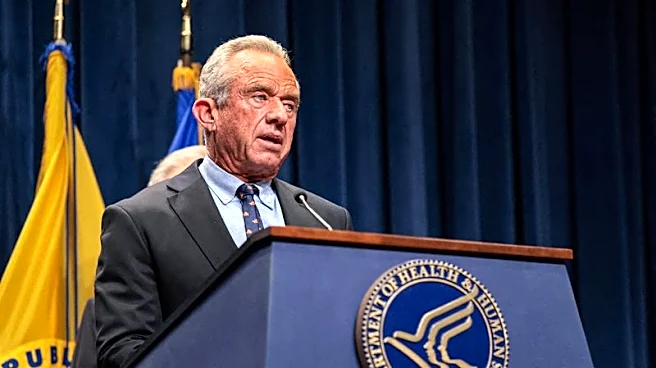
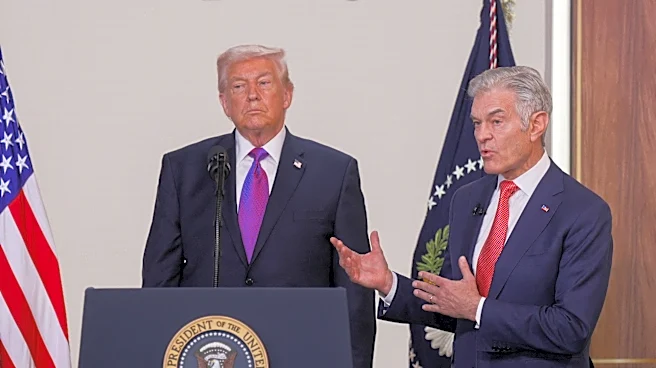
President Trump's second administration has brought autism into the national spotlight, marked by an executive order in early August to reduce routine childhood immunizations, falsely linking vaccines to autism. Health and Human Services Secretary Robert
F. Kennedy Jr. has also contributed to ungrounded claims regarding autism's causes, including links to childhood vaccines and Tylenol during pregnancy. Concurrently, the administration has implemented significant cuts and reorganizations within federal agencies responsible for protecting the rights of individuals with disabilities. This includes dismantling parts of the Department of Education, closing regional offices of the Office for Civil Rights, and shifting special-education oversight to HHS and the Office for Civil Rights to the Department of Justice. Funding for research into disparities in autism diagnoses and resources, particularly for marginalized communities, has also been significantly reduced.
Why It's Important?
These actions by the President Trump administration have profound implications for autistic children and their families across the U.S. The false association between vaccines and autism, promoted by the administration, could lead to a decrease in childhood immunization rates, posing public health risks. The restructuring and defunding of federal agencies like the Department of Education's Office for Civil Rights weaken the federal safety net designed to protect students with disabilities from discrimination. Disability advocates fear that these changes will make it more challenging for families, especially those from marginalized communities, to enforce their children's rights and access necessary support services. The reduction in research funding for disparities in autism diagnoses could exacerbate existing inequalities, making it harder to identify and support children of color, girls, and low-income students who are already less likely to be identified with autism.
What's Next?
The impact of these policy changes is expected to unfold over time, with disability rights advocates anticipating an increase in discrimination cases and a more confusing landscape for families seeking help. The backlog of civil rights cases and the freezing of investigations, as reported by a Senate committee and a Washington Post investigation, suggest that many complaints may go unresolved. Families like Josette Smith's, who are navigating complex discrimination claims, may face prolonged waits for resolution. The administration's focus on 'making federal support systems work better for children and families,' as stated by an HHS spokesperson, contrasts sharply with the concerns raised by advocates about reduced oversight and research. Future actions will likely involve continued advocacy from civil society groups and potential legal challenges to the administration's policies, as well as ongoing efforts by families to secure appropriate educational and healthcare services for their children.
Beyond the Headlines
The administration's approach to autism and disability rights touches upon deeper societal issues concerning scientific integrity, equity, and the role of government in protecting vulnerable populations. The promotion of ungrounded claims about vaccine-autism links undermines public trust in scientific consensus and evidence-based public health policies. The dismantling of agencies and research initiatives focused on diversity, equity, and inclusion reflects a broader ideological shift that could have long-term consequences for social justice and civil rights in the U.S. The disproportionate impact on children of color and low-income families highlights systemic inequalities that could be exacerbated, potentially funneling more children with disabilities into the juvenile and criminal justice systems due to a lack of timely assessments and interventions. This situation underscores the ongoing tension between political agendas and the well-being of marginalized communities.