
What's Happening?
A recent study explores the potential for ancient Martian lakes to have supported life by modeling the photoprotection offered by ferric ions (Fe3+) against ultraviolet C (UVC) radiation. The research
highlights that UVC radiation on Mars is typically harmful to life as we know it. However, the presence of high concentrations of Fe3+ in some ancient Martian lakes could have absorbed significant amounts of UVC radiation, potentially creating a more habitable environment for microorganisms. The study developed a model to estimate the viability of microorganisms exposed to UVC radiation in solutions with varying Fe3+ concentrations. Experimental assays demonstrated that the median lethal dose of UVC radiation increased in line with the model's predictions, validating its accuracy. This model was then applied to simulate the viability of life in Fe3+-rich lakes on ancient Mars, suggesting that such environments could have protected microorganisms, enhancing the understanding of potentially habitable conditions on the planet.
Why It's Important?
The study's findings are significant as they provide insights into the potential habitability of ancient Martian environments, which is a key area of interest in astrobiology. Understanding how life could have existed on Mars helps inform the search for extraterrestrial life and guides future exploration missions. The research also contributes to the broader understanding of how life can adapt to extreme conditions, which has implications for studying life's resilience on Earth and other planets. By demonstrating that ferric ions could have provided a protective mechanism against harmful radiation, the study opens new avenues for exploring how life might survive in harsh environments, both on Mars and elsewhere in the universe.
What's Next?
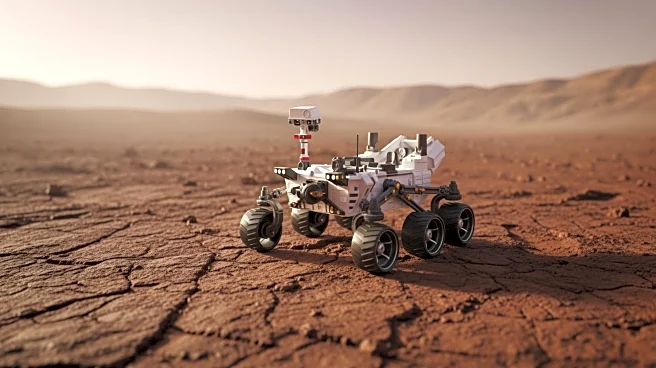
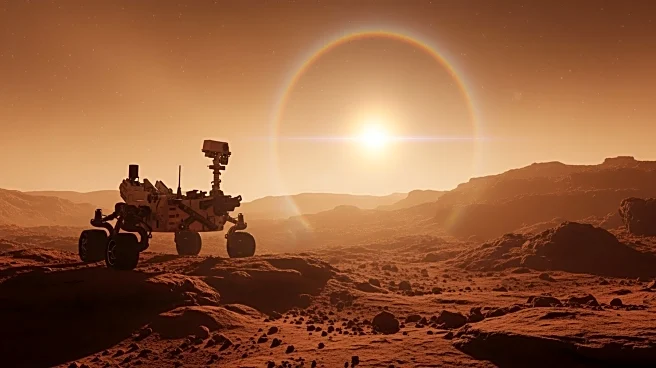
Future research could focus on further refining the model to include additional variables that might affect the habitability of Martian lakes, such as temperature fluctuations and chemical compositions. Additionally, upcoming Mars missions, such as those involving the Perseverance rover, could provide more data on the presence of ferric ions and other minerals in Martian soil and rocks, offering more context for these findings. Continued exploration and analysis of Martian geology and climate will be crucial in assessing the planet's past habitability and the potential for discovering signs of ancient life.